Showing posts with label Andrew Hill. Show all posts

Monday, July 8, 2013

What's New?: 7.8.2013

Some very brilliant stuff here. . .
Neil Young — Trans (1982)

Yes, Neil's infamous "new wave" album. Once an embarrassment, I can now hear it as a musician pushing forward and challenging himself just for the sake of not staying still creatively. Although, beginning with the standard Neil Young fare of 'Little Thing Called Love' does feel a bit misleading. The next four tracks find Neil aping Kraftwerk as much as anyone else did in the early 80's and masking his voice with a vocoder. And, at the time, it sure would have surprised me had I been there that, actually, the best tracks are the ones where Neil doesn't try to just tread water. 'Transformer Man' received a new lease when Neil tackled an acoustic version for his Unplugged album about a decade later.  'Computer Age' is the other really good synth-pop tune here that has rightly been reassessed in a more positive light.  The synth redux of 'Mr. Soul' is pretty bad, but, like I said, at least he was trying something else.  The album ends with one of Neil's most idiosyncratic masterpieces.  'Like an Inca' is absolutely mammoth in scope and executed pretty damn well, to boot.  If it were billed to Neil and Crazy Horse and were on any other album besides this one, with eight minutes and one of the most rewarding chord changes in Neil's entire repertoire, it would have a much bigger reputation than it ended up with.  To give an idea of how important the song is: Neil revived it for his own audio autobiography just a couple years ago.  Yeah, that one makes it all worthwhile.  Easily.

William Tyler — Behold the Spirit (2010)

An incredible record from an incredible musician.  This one is just sheer mood.  Like, the whole thing just feels like a symphony.  Yeah, it's got separate parts and everything, but it's really just one big piece to behold.  William Tyler is a very inspiring guitarist who has longstanding roots in two long running Americana bands and who has finally come to the spotlight in recent years.  Comparisons to John Fahey, Will Ackerman and Leo Kottke are imminent, as Will does not sing at all.  There's twang, sure.  There's a big impressionistic emotional aspect to the music as well.  But, I dunno, there's a different quality to what he's doing here.  Instead, he just plays these glorious one man walls of fingerpicked sound; sometimes on an electric, a bit more delay and echo than your average folkie.  Just wonderfully warm and heartfelt tunes.  Then, he'll just go straight wacky psychedelic like on 'To The Finland Station.'  Just something unique and sparkling about this guy.  He released an album before this one in 2008 under the name the Paper Hats and it's really good too — but sorry, kiddos, it was a German-only release.  It's on Amazon MP3 for cheap and Spotify (for free, of course).

William Tyler — Impossible Truth (2013)

One from earlier this year that I missed until now. Easily my pick for so far album of the year. Still sparse and mostly just Will, but he is joined by some backing musicians this time around. Just have a listen to the first track.  An incredibly tuneful rollercoaster that rivals even the best work of his influences, its scope is only matched by its emotion.  The whole album just feels like the most beautiful manifesto: the output of someone whose full potential has been fulfilled for the first time, and yet, who also seems to be just now entering a creative renaissance.  Dreamy, seemingly bottomless near drones like 'Cadillac Desert' would have been album highlights in the past, but are now things that play like an easy intermission.  Album closer 'The World Set Free' is gorgeous.  And with slow burning development, it takes many side trips into any number of musical caves and crevices of influence.  But, perhaps most importantly (to me anyway), in the final third of the tune, with the addition of a drum set, woodwinds, a string quartet and some straight up distorted guitar dissonance, it's as close to David Axelrod's scope as contemporary music has been for at least a few years.  Whoo boy, what a find.

Brian Eno — Music for Films (1978)

A varied and emotional album of small pieces.  Seriously, this thing is a single record, but there's eighteen tracks in total!  Some of the tracks with a full band backing actually remind me of early Cocteau Twins, if you can imagine that.  There's a really "spacey" vibe to this music and I don't just mean the silence between the notes.  When I hear something like 'Alternative 3' or 'From the Same Hill' I get images of nebulae and elliptical galaxies in mind.  Sigur Rós has obviously learned a lot from the 'Sparrowfall' series that closes out side one of the album.  But Brian had obviously learned a lot from his time in Germany a couple years previous.  Things go in cycles, after all.  Very emotive stuff, in any case.  And the relatively accessible melodies combined with the shorter length of the pieces makes this one arguably Eno's finest work that I've yet encountered.

Nic Jones — Penguin Eggs (1980)

Truly a wonderful, but bittersweet work from a musician that seemed to be on the cusp of something even better.  This has one of the single greatest side one/track one's of all time with Nic's absolutely ace arrangement and performance of 'Canadee-I-O.'  A stunner on any level of evaluation, it's probably the definitive version of the tune.  The rest of the album is all traditional tunes as well, and the focus remains Nic's seemingly supernatural guitar playing.  A tune like 'Courting is a Pleasure' just appears to be a pleasant song of a broken heart on the surface, but Nic's accompanying himself on guitar makes the song a lot fuller than it initially may appear to be.  There's some tunes with accordion like 'The Drowned Lovers' and 'Barrack Street' that are so jaunty and bouncing, they sound nearly like sea shanties (in a good way).  The solo instrumental 'Planxty Davis' is generally the sort of gorgeous thing you're in for here, though.  Nic was injured not too long after this album and it left him unable to play for many years.  At least this album got made.

Jimmy Woods Sextet — Conflict (1963)

A rare (and odd) sideman appearance from Andrew Hill drew me to this one.  The alto player that led this session (not to be confused with the similarly named, yet equally as overlooked, bassist) was apparently a well-respected composer among his peers and this was one of only two sessions that he led before deciding that that was enough of that.  Not only does Andrew Hill play on this one, Elvin Jones is at the kit and even tenor demigod Harold Land is present.  I swear, if this one were on one of the east coast labels, instead of the long-ignored west coast-based Contemporary label, it would be considered right there with all the classics on Blue Note and Prestige.  Have a listen to the title track and see for yourself.  The whole record, perhaps because of Andrew Hill's presence (or so I'd assume?), has a similar "in-but-slightly-out" sound.  This version has three bonus tracks that are alternate takes of tunes on the proper album, but hearing this band is an absolute pleasure, regardless of the tunes they're riffing on.  A one hundred percent stone cold classic.  Whoo boy, it's a firecracker of a session.

Jon Hassell — Power Spot (1986)

Truly, it would not seem a just world if Jon Hassell didn't have at least one album released on the ECM label. I'm just surprised it took this long into his career for it to happen.  This album is probably the thing most similar in overall sound to his Fourth World album since that album, six years previous to this one.  It's a very hard thing to review a Jon Hassell album and do it justice, simply because nothing else sounds like the music he creates.  Dreamy washes of sound and percussive ramblings are the order of the day for the base on which Jon builds his towers of blurted out blocks from his heavily treated trumpet.  It's a completely and strangely beautiful album and a defining moment, in both Jon's and ECM's respective catalogues.  Top stuff.

~Austin

Wednesday, January 18, 2012

Andrew Hill — Mosaic Select 23 (1978/2007)

If Redundant Chicanery has taught you nothing during its tenure, the one thing you will have taken away from this place is that I often take into consideration personal experience when listening to music (either the maker's or mine — it's interchangeable, really).  

Andrew Hill —one of the most original and resonating voices in modern music— recorded nearly three hours worth of newly composed material in the late summer and fall of 1978 amidst a cross-country move in the wake of his wife being determined terminally ill.

So, the contents of this box set?  

Yeah that's what he was playing in the shadow of all of that change.  

A move to the inner-Bay Area and an acceptance of his surroundings are basically what's documented here.  

Is it sad?  No.

Is it happy?  No.

Is it boring?  No.

Is it rewarding?  Double yes with a side of yesrings, please.

He is absolutely playing his heart out for the duration here.  If you have the patience, you will be converted to the church of Andrew Hill.  I was already here, so I guess take my words as those of a true believer.

He seems to be playing life in all its profound glories and equally as profound sadness here with a cool and pronounced ability that simultaneously says, "I know that heaviness in your heart" and "Hey, cop this!"

Two songs from the sessions documented here were actually released on a seldom heard, independently released album.  Those two songs are finally reissued here along with everything that was considered along with them.  

It's astounding really.

A pianist goes into a studio and decides to play obsessively introspective material for three hours and the masters simply get handed over to him.  Years later, we finally get to hear how a tune like 'California Tinge' (in two versions) finally evolved into 'Reverend Du Bop' — and not to mention that all three versions are excellent.  

I don't really have much else to say here expect that it is an absolute joy to hear these sessions of Andrew unaccompanied and uninterrupted.  

He sounds full of creativity.  Full of life.  

Wonderfully soothing music.

~Austin

Tuesday, January 10, 2012

What's New?: 1.10.2012

I'm way behind and half of this shit got deleted midway through the write-up, so don't expect anything real deep in these thoughts.  Here we go. . .

Foreigner — Double Vision (1978)
Just solid arena rock from when that whole thing was taking off.  I don't know what it is about Foreigner that so appeals to me, as they are seemingly in direct contrast with everything else I'm normally into.  Maybe it's the thoughtful guitar work of Mick Jones (which is surprisingly sparse, for this sort of thing).  Of course, you get the two big hits on here: 'Hot Blooded' and the title track.  Couple of harmless rockers, they are.  But fun for sure. Perhaps predictably, I like the more introspective-themed mid tempo numbers like 'Back Where You Belong' (is it just me, or this oddly reminiscent of early Prince?).  The twangy ballad 'I Have Waited So Long' is fantastic and easily the album highlight.

Foreigner — Head Games (1979)
More of the same and still pretty much harmless fun.  The production on this one is a bit more layered and interesting, as the use of synthesizers is done in a fun way that incorporates weird sounds with pop melodies.  Case in point is 'Love on the Telephone' which is lyrically a pretty dumb song, but musically, it's pure stylistic sheen and all around ear candy.  The title track was the big hit on this one, but I again prefer the mellower stuff: 'The Modern Day' (sung by Mick Jones) is the sort of blue collar, relishing in the simple pleasures of life tune that arena rock is supposed to be about while 'Do What You Like' is (shockingly!) jangly and perfectly understated.  

Foreigner — 4 (1981)
Probably their biggest album.  'Juke Box Hero' should get any 80's night started off right.  There's a bit more of a melodramatic overtone to the songs here and you can definitely hear the album's subsequent influence on the rest of the 80's rock scene in that respect.  For a full example of this, see the buildup in 'Break it Up.' 'Waiting for a Girl Like You' is the power ballad here and I must have something wrong with me, because I find something rather appealing about its Fender Rhodes electric piano riff.  Another surprising moment is the funk rock and tremelo-obsessed riff of 'Urgent'.  Great sax by the one and only Jr. Walker as well.  The big moment for me, though, was the weird atmospheric riff of 'Girl on the Moon' which I knew previously in another form.  Enjoyable as hell, with that great early late 70's/80's feel in the production sounds.

Cheap Trick — One on One (1982)
Yeah, Cheap Trick was not at their best on this one.  This kind person is to be commended for this upload as it gives a slight indicator of just how much the band was going through the motions here.  Tom Peterson was gone and Robin Zander sounds like he's trying too hard with his pseudo-tough guy vocals most of the time.  The title track is a good Cheap Trick rocker and 'Saturday at Midnight' is such a goofy new waver that it gets by purely on appearance.  Side two is a lot stronger (despite 'I Want Be Man') and might make you forget how mediocre side one was.  Otherwise, yeah: not their finest moment.

Cheap Trick — Next Position Please (1983)
Eff what you think, this is a darn fine Cheap Trick long player.  If I were to continue believing the hype, I would have just lived my life thinking they stopped being good after Dream Police and that would have been that.  But no, this Todd Rundgren-produced album is peak period new wave-ish rock from a band that had struggled for a few albums previous.  Something should spark in the listener's ears right away when the first track 'I Can't Take it' kicks in: it's jangly, it's layered, it's catchy and it's ultimately an excellent song.  When 'Borderline' follows in the same vein, you should be clued in that something is up.  The tough-guy rock stance that One on One took is noticeably absent from this entire album.  The title track is another richly melodic strummer that finds the band getting critical of consumer philosophy (much in the vein of 'Stiff Competition'), while 'Invaders of the Heart' could be mistaken for an outtake from the first album, if you ask me.  Overall, yeah!  I never thought I'd dig another Cheap Trick album as much as their initial output, but here it is.  The expanded edition from the early 90's  (sixteen tracks in total — all worth it, too) is out of print (and subsequently, kind of spendy), but all of the bonus tracks are available for download for a buck a throw on Amazon, so go for it, I say (especially when you're able to find the vinyl in the dollar bin in the first place!).  Color me downright pleased.  

The Hollies — The Hollies' Greatest Hits (1960's/early 70's)
I'm here as a Graham Nash fan, first and foremost.  I find him and his work in the 70's (be it with CSN, just C or on his own) to be extremely underrated and a lot more enduring than a lot of his peers' work.  But, also as a 60's music fan in general, when this thing kicked off with 'Bus Stop' I couldn't help but grin ear-to-ear.  This the later issue of this compilation from the  70's, so it does include some later songs from after Graham had parted company with the band, but even some of those are darn good.  But still, Nash is why I'm here and it's awesome to hear his unmistakable vocal timbre and enunciation on songs like 'Carrie Ann' and especially the godlike mini-masterpiece 'King Midas In Reverse.'  Great stuff, especially out of the dollar bin.  And nice to finally hear where Nash was coming from, pre-CSN.  

Donovan — Barabajagal (1969)
I decided, after hearing a number of his songs in passing and surmising that they kick all kinds of butt, that I've neglected Donovan long enough, thank you very much.  I've had that one album that seemed pretty much essential for a few years, but I've not bothered beyond that.  Until now.  The big revelation here for me is: he's folky!  Strummy and jangly, poppy and lyrical.  Sheesh, he's a downright songwriter, by gum!  'Where is She?' displays Donovan the balladeer and just goes to that place that I love in 60's pop.  And, you know, I should say that I have a serious predisposition to this music.  I love the way the snare drum crackles, the way the the bass sounds like an oversized rubberband.  You just can't recreate that.  'Atlantis' was the hit off this one and its pure gold.  Its seemingly effortless resonance is just a screaming clue to the obvious fact that I should not have been ignoring the guy for this long.  And besides, he sounds way too much like Stuart Murdoch at times for me to be able to honestly dislike him.

Donovan — The Hurdy Gurdy Man (1968)
Probably too much of a mixed bag that anybody at the time would really take a step back and understand what Donovan actually did here.  It's all here: psychedelic blues rock, strumminess, novelties, folky guy musings.  Packed to the brim with thirteen short tracks that find Donovan firing on all cylinders like nobody's business.  The highlight here is easily 'Get Thy Bearings' which manages to be pseduo-funky, jazzy and retain that great strummy acoustic base that Donovan used as his launching pad.  Understandably underrated, as there were no hits on this one, but that just ensures its enduring quality.  Nearly fifty years later and it still sounds great.  Right on.

The (English) Beat — Special Beat Service (1983)
Born out of Britain's ska-revival, I have to say that I'm shocked it took me so long to get to these guys.  They have so many of the qualities that I love in music.  British?  Check.  New wave-era?  Check.  Jangly guitars?  Check.  Slight reggae influence?  Check.  Introspective tones?  Check.  When I dropped the needle on this and heard 'I Confess' as the opener, I knew that I had (finally) made the right decision.  There's a pop sensibility at play here, so even the band are from England's ska-revival, they have not forgotten the lesson that a great pop tune can teach (see 'Sole Salvation').  'Save it for Later' is the band's biggest moment for us Americans and, boy oh boy, is it a good one.  As a fan of Aztec Camera, Orange Juice and the Clash, I'm surprised that it took me this long to find these guys.  Glad I did though.  Peak new wave stuff.

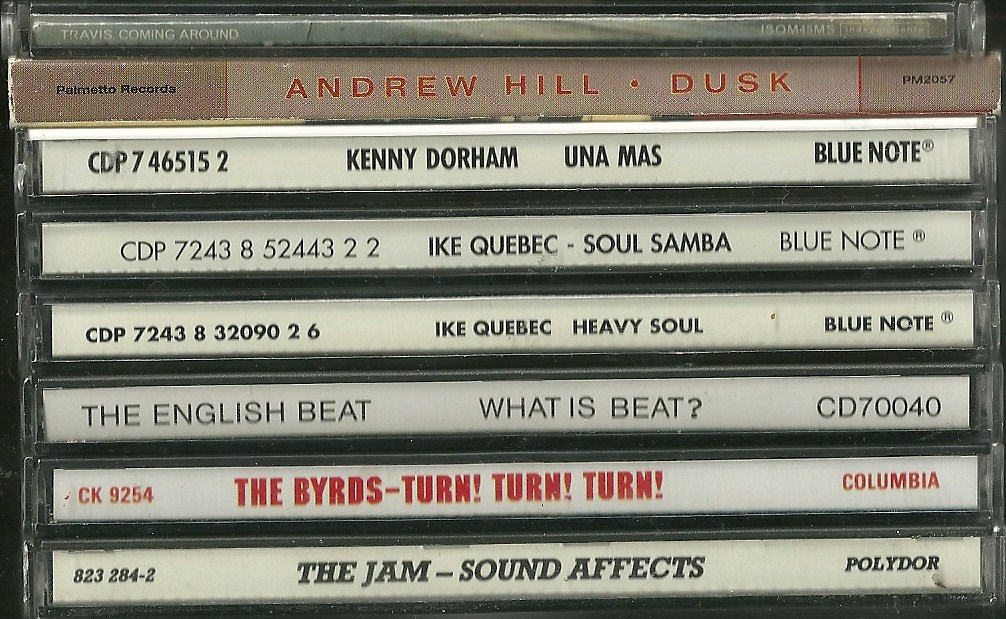
Travis — Coming Around (2000)
Non-album single that finds the band finding their voice for the first time.  The title track is a tasty R.E.M.-esque twelve-string jangler, complete with chorus harmony vocals.  There are two b-sides here as well: 'Just the Faces Change' is an acoustic strummer that finds a rare non-Fran Healy lead vocal while 'The Connection' is the sort of layered, jangly, introspective song that the band has made its calling card over the past decade.  I know bands like Crowded House, the Trashcan Sinatras and these guys are not considered "cool" with most Americans, but as long as these guys are able to remain one of the kings of the middle of the road jangle band throne with songs like these, I don't want to be "cool."

Andrew Hill — Dusk (2000)
And then he was back.  He would die a few years later, but this album is the one that got most critics and jazz listeners in general used to the fact that Andrew Hill was on the scene and was just as poignant as he was in the 1960's.  The title track is the sort of slow, rolling post-bop exploration that Andrew made his calling card.  Much too weird to be considered mainstream; much too melodic to be considered avant garde.  And such was life for Andrew Hill.  This is a strong set of melodies he's working with here and it's nice to hear him wrestle with themes uninterrupted on a tune like 'Tough Love' (though we'll properly address Andrew's solo explorations next time).  Overall, not a lot to say outside of how I find it absolutely awesome that he can record an album like this one, thirty five years after he made his initial impact, change nothing about his compositional approach and still manage to sound wholly unique.  

Kenny Dorham — Una Mas (1963)
The only album of the Kenny Dorham-Joe Henderson co-leader sessions that I didn't have.  Of course, the title track is the sort of Blue Note soul jazz blowing session that made the label famous in the first place.  So good, I won't even try to articulate.  Just listen and try not to groove along (and then enjoy the hell out of your fail).  'Sao Paulo' is a ridiculously moody post-bopper and just goes to show how daring and uncaring Blue Note was at this point.  It's like Miles' second great quintet before they even got there (though Herbie and Tony being in this band certainly helped).  I can finally understand why this album has such undisputed classic status.  And, besides that, it's a very important chapter in the early years of the Joe Henderson story.  

Ike Quebec — Soul Samba (1962)
A glance at the title and the year of release on this one and you may guess that it's a gimmicky cash-in on the bossa nova craze that had America in its grasp at that point.  But you're not taking into account that the mighty Ike Quebec is involved.  At this point in his career, he could have taken polka and have successfully made it sound like some of the best soul jazz ever.  Kenny Burrell is about on guitar and despite the similar pace of the songs and the similarly likable heads of the tunes, you just can't truly hate on something that has this much soul.  

Ike Quebec — Heavy Soul (1961)
And again, Ike in the twilight of his career, much like Ben Webster, just hit these unbelievably soulful mid-tempo grooves like it was just nothin'.  This one does have the ballads that he became known for in his later years, but it also has these moments of pure badassery that remain unmatched to this day.  I often forget about how good he actually is because I've got a spotty cross-section of his discography.  But, jesus, he's good.  Man oh man.  Maybe I should do something about that. . .

The (English) Beat — What is Beat? (early 1980's)
Good overview!  As a hits collection, it does its job, but it also serves more than that purpose, as it includes extended 12" mixes of the big hits, non-album singles and even some live tracks towards the end.  Can't be mad at their so-silly-it's-great cover of 'Tears of a Clown' or the long mixes.  I have to say that the long mix of 'I Confess' surpasses the original for me.  Just seems to lend itself to the longer, stretched-out form (thanks for the tablas).

The Byrds — Turn! Turn! Turn! (1966)
Been listening to the Byrds a bit recently and it occurred to me that, besides Notorious Byrd Brothers, I have none of their proper albums.  Considering that one of my favorite singers of all time started with them and that they are quite possibly the one definitive American jangle band, I decided that I had no excuse.  Had a good opportunity to scoop this one up, so I figured I'd go for it.  The title track, overplayed as it might be, is quite simply, one of the greatest pieces of music I've ever heard.  It never gets old.  However, it was the deeper album cuts that really surprised me: the airily-atmospheric, Gene Clark sung 'If You're Gone' and Roger McGuinn's mind-expanding revision of 'Oh Susannah' clue me in to something that I never would've gotten from a greatest hits collection.  I should have known better than to write off their albums for this long.

The Jam — Sound Affects (1980)
I haven't necessarily written the Jam off over the years, I've just been a lot more interested in Paul Weller's angry, but pretentious side.  The big hit from this album is the decidedly not punk-sounding 'That's Entertainment' and I still love the song (though I will admit that I was more familiar with this cover than I was the original previously).  'Man in the Corner Shop' is another case for why greatest hits collections aren't representative pieces, as it's clearly the best Jam song I've ever heard that isn't called 'In the City' (although I don't have that whole album either, so I could still be missing something that might trump it).  Overall, yeah man, I dig the Jam.

~Austin

Tuesday, December 27, 2011

What's New?: 12.27.2011


Andrew Hill — A Beautiful Day (2002)
Pretty decent post-bop, free-leaning stuff. And yeah, I know these are all Andrew's original compositions, but I've never really liked when he got so attached to the horn arrangements, like he does here. Most of the arrangements are dominated by the horn charts, in fact. But when Andrew takes a solo, wowweeee! That rare occurrence on '5 Mo' illustrates just why the man is a legend. It's almost like he deliberately creates these scenarios where he must rebel. The song's head is one of the more chaotic of the bunch here, so he appropriately takes a wandering, melodic solo in the face of otherwise dissonance. He is not up front for most of the proceedings here, but the tunes are all nice, if not a little more leaning towards his more rambunctious side. 'Faded Beauty' and the title track are both the sort of kind of free, mostly just searching tunes that Andrew used to make his own voice. Certainly not his most approachable work, but darn good for the already converted.

Jónsi — We Bought a Zoo (2011)
I've become such a big fan of Jón Þór Birgisson and his band Sigur Rós over the past two years that I am essentially at a clamoring state right now for anything new. I had high expectations for this one, perhaps foolishly. As far as the new material, it is definitely in soundtrack mode, as it essentially sounds like outtakes from what Jónsi does otherwise. Unfinished song ideas that don't sound totally right without the visual accompaniment. But still, it's music written in the style that will be familiar to fans of his previous work, so there's plenty for us dorks to latch onto. Most of the new material is instrumental with fleeting "Oooohhhhh aaahhhhhhh" vocals, but there are a couple of genuine brand new, fully fleshed out tracks here and they're surprisingly lost in the shuffle of the rest of the album. I mean, I like them just as much as anything else here, but they're not completely standouts, y'know? (the tracks in reference here are 'Ævin Endar' and 'Gathering Stories'). Still, even though this music probably serves its purpose quite well in the film —and yet, is somehow disappointing to me as a fan of the musicians creating it— I have to say that this will keep me satisfied for at least a little while. It's not a major revelation —or, indeed, a revelation at all— but it's still darn good. And it definitely has that feeling to it (the one that keeps me coming back to anything with Jón's name on it in the first place).

The Cure — Bestival Live 2011 (2011)
New Cure album and who gives a shit? ME! Because I'm a hardcore fan and I'm clearly who this 2 disc, 32-track, 140-minute behemoth was aimed at. I will keep my comments brief, because it is just a live album after all (despite that it's their first official live album in nearly twenty years and it marks as an account of an official lineup change [Porl Thompson is back out and Roger O'Donnell is back in!]). They sound infinitely better when hitting those earlier songs. Cons: crappy drum sound, predictable hits being played up front, Robert's 'spoken' vocals. Pros: jesus, are they having fun or what?, 'PUSH'!!!!!!!, the whole concept that they just played this show a few hours before I was at this show is somehow awesome to me, all the songs that they haven't played regularly in forever and finally 'THE LOVECATS'!!!!!!! Audience singalong FTW! Seriously, the FREAKING LOVECATS!!! YES!!! Overall, it's nothing that will appeal to anyone except dorks like me, but enjoyable as all hell. The fucking Cure, man. They're one of my favorites for a reason. All profits go to charity, buy it.

Solbakken — Music for Lost (2004)
They are the Mighty Bakk. And I love them. This is probably the Mighty Bakk's most post-rockin' affair, as it's easily their most instrumental album. It's also a soundtrack, so there are a few songs here that I knew previously (namely, 'Entertain the Elderly' and 'House Been Taken' from Klonapet and 'Your Cave' from their In the Fishtank session with the Black Heart Procession). But besides those, everything else was new to me (this is the only album of the Mighty Bakk's that I didn't buy at the time because it was brand new, ungodly expensive and nobody had it). The instrumentals range from short and sweetly bleak vintage numbers ('Hell Impro Insect Outburst' and 'Saloon'), to goofy (the pseudo-rockabilly sendup cover of 'Ring of Fire') to just downright incredible moments ('Birth of a Jumper'). The new vocal songs are dark and gloomy, but with that great injection of catchiness that the Mighty Bakk is just perfect at. If this is to be their last album (which is most likely), it's a strange one, but still exceptionally good. I still find much to go back to on this one, even with the recycled material. They are quickly becoming one of my favorite bands of all time.

~Austin

Monday, March 31, 2008

My latest purchases and some thoughts... (Part three)

This is becoming a regular thing...

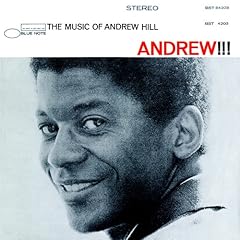
Andrew Hill — ANDREW!!! (1964)

After I liked Time Lines so much, I did some research and decided I should make this my next Andrew Hill purchase, mainly based on the fact that its got Bobby Hutcherson and John Gilmore (two of my favorites) as sidemen. It's not quite as wacky as I thought it may have been, but it's a lot like some of, say, Wayne Shorter or Hutcherson's own albums of the time: rooted in the strongest bop traditions, but very searching and has very subtle odditites about it that make the music not really at home in either the mainstream post-bop nor avant garde arenas. Very thought provoking music. Definitely something that I will have to sit down with for a few listens before I move on to more of his stuff.

The Virgin Prunes — The Moon Looked Down and Laughed (1986)

I'm a big Gavin Friday fan, but have never been much into the Prunes. This album is basically the blueprint for Friday's solo career, as it's the band's last studio album. It finds them pulling in different directions, but the most interesting things for me are the Gavin songs. In a way, it's almost like Friday's first solo album, but not quite. Definitely the tamest of the Prunes' albums, it's not really at home in either their catalogue, nor with Friday's solo albums. I still digs it though.

The Ohio Players — Pain (1972)

The Players' first album on Westbound and definitely their stoniest. There's just a nice, solid quality to these early Players albums. The funk isn't too jammy and they're just being soulful weirdos in the studio, which makes for some really interesting moments, like, say "Never Had A Dream."

David Sylvian — Dead Bees On A Cake (1999)

I am going slow with David Sylvian's solo catalogue because, much like Andrew Hill, this music is very enthralling and thought provoking. It took me three full listens to really assign the songs their own identities. It's a very long and beatifully sparse album, much in the same vein as Secrets of the Beehive and Gone To Earth. Very content, yet simultaenously searching music. Good stuff.

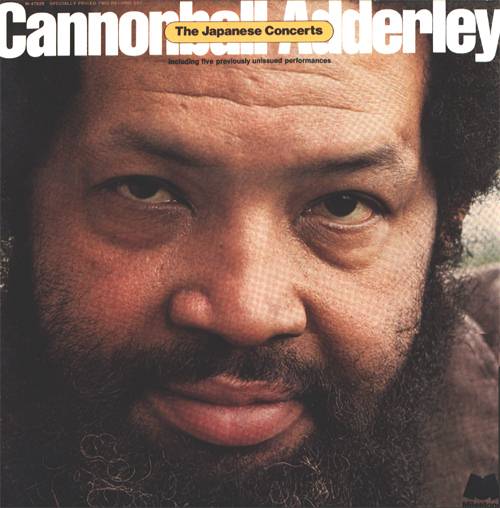
Cannonball Adderley — The Japanese Concerts (recorded 1963, released 1975)

This is actually the album Nippon Soul with an entire extra record of a previously unissued Japanese live set by the same sextet. Revelatory for me, simply based on the sextet version of "Work Song." A gem of a find.

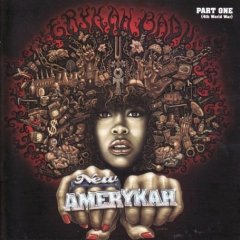
Erykah Badu — New AmERYKAH Part one (4th World War) (2008)

I was initially put off by the chaotic sequencing and 'hip hop-ness' of the vibe the music had, but after a few listens, I'm pretty much sold on it. I've never really gotten the big deal about SA-RA, but the musical backings they provide here are next best thing to J Dilla, I suppose (read into that however you see fit). Although about a third of it seems very unfocused and the tracks aren't really actual 'songs' at all, the good parts are really good. She's very inspired by the revolutionary-minded Black Panther ideologies of the early 70's and when something that's totally funky and righteous like "The Cell" pops up, you might actually mistake this for 1973. Very politically charged, but not very specific; so things are more ambiguous than perhaps she was shooting for in the content. However, it's just refreshing to hear something this righteous and flat out funky —both genuine and not just imitations, too— in these days. It's like this album makes good on all the things Worldwide Underground failed so miserably with. Well done, I must say.

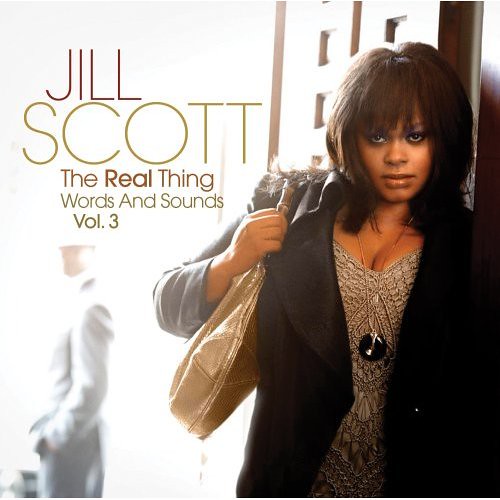
Jill Scott — The Real Thing Words and Sounds Vol. 3 (2007)

Although maybe not quite as good as her last album, this is just another strong installment in Jill's catalogue. She doesn't sound quite as inspired, generally speaking, on this album as she has in the past and, thus, it is perhaps her most 'sexed-up' album yet. Musically, it's the same type of classy lite-hip hop/adult contempo soul that she's mastered so well over the past few years. Probably her 'worst' album yet, but that's a relative term and there's actually nothing bad about it at all.

I also picked up a CD of Bela Bartok's Music for Strings, Percussion and Celesta, which also has his pieces Divertimento and Zwei Potrats on Deutsche Grammaphon, but could not find a cover photo for it. It's pretty busy stuff, but has a really resonating vibe to it, especially with the celesta in there.

That's it for now.

More on the way, no doubt.

~Austin

Saturday, March 1, 2008

My latest purchases and some thoughts...

Out of pure boredom...

On the Spot: A Peek at the 1960's Nordic Jazz Scene (late 60's/early 70's)
On the mighty Ricky Tick label, out of Finland. Also home to folks like the Five Corners Quintet and Dalindeo. This compilation though, highlights the folks that planted the seeds for the current scene of Nordic jazzy dancey folks. Eleven songs of pure swingin' dancefloor jazz from an interesting time in the music's history and an even more interesting place. Sure, there's the americans who were using Europe as money making venue (Dexter Gordon and my favorite, Sahib Shihab) who appear here, but there's also quite a few local folks, who really swing and get deep into that soul jazz groove. Really exceptional stuff, actually. But comps like these are always a double edged sword for me, because I'm such an obsessive mofo. Now I want to hear full albums from people like Kjell Karlsen and Otto Donner. Maybe one day. But for now, there's plenty of groove and unique ideas offered up here to keep me interested for quite a while.

The Durutti Column — Fidelity (1996)

Recently picked up the reissue on the unbelievably cool British label LTM and I like the album after a few initial listens. Seems quite mid-90's techno, actually. I loved Obey the Time personally, but that was more of a UK Acid Housey/proto-trip hop sort of thing, whereas this album is much more synthy. 'Future Perfect' kicked me in the brain, which was cool. Otherwise, it seems like yet another one of those later period Durutti albums that requires at least ten front to back listens before it really hits you. Great vocals throughout from Elli Rudge though. She's got a purrty voice.

The Durutti Column — Idiot Savants (2007)


This album has officially kicked my ass. Immediately, it shot to the top of my iTunes 'most played' list. If I had heard it last year, it would've been my album of the year, without question. It's unfortunately cliched to say things like this, because of its overuse in offensive 'publications' like Pitchfork Media and Rolling Stone, but the Durutti Column, with this album, officially gets better with each album. I declared Keep Breathing my album of the year in 2006 and, upon hearing Sporadic Three in mid-year, I was trying not to jump the gun, so I kept my mouth aprehensively shut. However, being that this album was released last year and last year is already over, I have no problem with declaring it the year's best album. Eight songs, fifty-two minutes. He doesn't even care what anyone thinks anymore. This is not inaccessible music. It's just music that exists outside of any preconceived notion of what popular music currently is. And it just so happens to be utterly fantastic. Easily on par with the Column's peak work from the early 80's, but sounds entirely different. Simply wonderful, thought provoking and incredibly heartfelt music.

Wes Montgomery — Smokin' at the Half Note (1965)


Ahhh man... Wes Montgomery plays his ass off with Mr. PC and those weeners that played with Miles. How can this not suck?


Andrew Hill — Time Lines (2006)


This is my first Andrew Hill album. I don't know, I was just all uber-suspect of his hipster revival in recent years. That, and his lumping-in with the free jazzers. But it's not all skronk, by any means. It actually made me think of Clifford Thornton's later work, which was very friendly. The whole thing has an underlying sadness, which is actually kind of a downer, because he died not too long after. It's rather good, though.

Chris Walla — Field Manual (2008)


Well, I don't hate it as much upon second and third listens as much as I did my first. Don't get me wrong, I still think it's kind of poopy, but there's a few songs that are alright. Overall though, I'd give it maybe two and one-half or three out of five stars. Definitely a footnote for Death Cab fans. Otherwise, ignore.

Ron Carter — Spanish Blue (1974)


A good mid-70's CTI session for Mr. Bow-Tie. He re-envisions 'So What' as a latin-tinged post-bopper that is ten times as fast as the original. Cool stuff. Another strong album in the long line of Mr. Carter's unimpeachably consistent discography.

Duke Ellington — Live at the Whitney (1972)


A later live appearance by Duke and an even stranger album because it's just a drums-bass-piano trio. Seriously great stuff. The version of 'Lotus Blossom' is absolutely hypnotic. The tunes are short and Duke does little more than state the themes, but it's just mesmerizing. Beautiful and joyous stuff, which is great to hear because Duke was so close to death.

Bill Evans — Trio 65 (1965)


Believe it or not, my Bill Evans collection of studio albums is incomplete. The guy is practically my Jesus and I've yet to hear everything that was up to his standards. I don't know what it is, but I'm biased against his Verve period. He certainly did some wonderful stuff there, but nearly all of his records directly before or immediately after hit me a lot harder. Decent versions of 'Round Midnight', 'How My Heart Sings' and 'Come Rain or Come Shine', but the band just seems to be throwing out material for the label to have something to release. Not bad by any means, just not as heartfelt as Evans is usually known for.


Well, that's all I feel like saying for now.

Happy listening.

~Austin