Showing posts with label the Cocteau Twins. Show all posts

Wednesday, July 3, 2013

What's New?: 7.3.2013

Continuing on. . . and on. . . and on. . .

The Appleseed Cast — Illumination Ritual (2013)

It's a strange time to be an Appleseed Cast fan. Their dreamy cascades of cymbals and guitars is still present on their first album in four years, but the only original member left is singer and creative center Chris Crisci. Aaron Pillar and John Momberg's respective farewells are now relegated to the stopgap Middle States EP from two years ago. And while Aaron's inimitable guitar style is definitely missed on Illumination Ritual (things definitely take a turn in a more angular direction), this album still manages to sound like the Appleseed Cast. Except, they're really fast now. There is a very much an upswing in tempos this time around and that's a catch twenty-two, because while the songs definitely have riffs and hooks that are great, it almost feels like the whole album is just one long song, because the tempos don't vary much. Still, it sounds an awful lot like Mare Vitalis, and that's fantastic because that's not only an album I love, it's also the one where I feel like they were doing great pop songs when you stripped away all the effects and noise. So, here: 'Cathedral Rings.' It's an emotionally charged, dynamic, anthemic, fist-pumping, rock-and-fucken-rolling masterpiece. Probably their best all around song since the Peregrine days, at very least. Side two of the album contains a very epic Low Level Owl-esque two-fer that was probably intended to be the big centerpiece of the album with 'Barrier Islands (Do We Remain?)' morphing into 'North Star Ordination.' It's definitely a highlight, in a classic-sounding Appleseed sort of way. Throw in a couple instrumentals, and we're done. Overall, it's Chris delivering a by-the-numbers Appleseed Cast record and trying to give us (the fans) what he thinks we want. Little does he know, I will like whatever he does as long as he's leading with his heart and not trying to rehash past glories. I'm extra critical of this stuff because they are one of the best things currently going. And besides, as the proper full length follow up to Sagarmatha, it was going to be hard to top that one. I just wish Aaron's departure from the band wasn't so glossed over.

Bob Dylan — Dylan (1970)

Generally regarded as Bob's "worst" album, it's also generally accepted that he was trying to piss off fans when he recorded it. It was mostly recorded during the same sessions for Self Potrait and, just like that album has an unmerited bad reputation, after fully digesting this one, I have to say it falls into the same category (some of the album consists of outtakes from the unimpeachable classic New Morning). There are no originals here, but the things Bob does with tunes like 'Mr. Bojangles' and 'Big Yellow Taxi' are fascinating and ultimately they feel less like someone making fun of them and more like someone just screwing around. There's a very nice folk pop sheen to the production and I have a really hard time not playing the whole album whenever I listen to it. Certainly not his best work, but this is just an alright album, where he would commit near atrocities in the future.

Atoms for Peace — Default (2013)

B-side action from one of the year's most pleasant surprises. The a-side was definitely a grower for me and it appears here in an instrumental version alongside the non-album doodle of a song 'What the Eyeballs Did.' It's one of the AfP songs where Flea's bass playing is front and center and it's all the better for it. Nice to hear more from these guys.

Cocteau Twins — Otherness (1995)

I've had this guy digitally for many years, but it's always nice to find hard copies of these sorts of things. It's essentially a remix EP wherein Robin and Liz try to make some older songs kind of ambient dancey. Not a total success, but not a waste of time either. The highlight is the super blissed out, very nearly psychedelic, drumless retake of 'Cherry Coloured Funk.' Well done on that one, you lot.

Morrissey — The HMV/Parlophone Singles '88-'95 (late 80's/early 90's)

A lot of this was not new to me. In fact, about 90% of it wasn't. But, for a few of these b-sides (and even a couple of the a-sides), they appeared on the British singles and nothing else. So, they were out of print for many years until these things came out.  But forget it: those were too expensive and way too bulky for me.  This guy squeezed out a few years ago under my radar and it's those two sets slimmed down to three CDs: the perfect package.  Way too many Moz classics (and just plain old musical classics) to start naming names, so I'll just run down the list of things I liked that I didn't already know.  'Journalists Who Lie' is about as awesome as it can get when you look at the title and then consider that the song could be described as "cartoon rockabilly."  'Pregnant for the Last Time' is more fake rockabilly fun, while tunes like 'You've Had Her' and 'I'd Love To' are the sort of cascading introspective mini-epics that find Steve dropping the rockstar façade and singing these full on heartachingly genuine masterpieces.  I guess I understand why he's hidden them away and basically assigned them to obscurity status in his own catalogue.  I mean I do but I don't.  The frustration of being a Morrissey fan.  Top tunes, whatever the case.

Morrissey — Beethoven Was Deaf (1993)

Morrissey's best band rocking out for a bunch of Frenchies. There's a sense to this live album that it was meant to be a big grand assertion of dominance —and, in retrospect, it most certainly is— but, at the time it was virtually ignored in the shadow of the near smear campaign being launched at Steve in the British music press (not to mention: this album has still never been released in America). Oh well, by the wayside went definitive versions of essential Moz classics (the rockabilly-ed up 'Sister I'm A Poet', the flawlessly rambunctious run through of 'The Loop' and the version of 'Jack the Ripper' that's so good it makes the studio version seem like a sick joke).  Of course, all of the then-Moz calling cards are present as well, but it's the diversity and the tension in the setlist that really makes this one a complete and total classic.  It's an album that I've known for several years, but it feels like such a relief to finally have a hard copy of my own.  Where in later years, Morrissey released live things for fan benefit only, this one actually feels like it belongs in the strange saga of Morrissey's creative trajectory.  And, of course, it doesn't hurt that they play a totally kickass version of my favorite Morrissey song.

Q and Not U — Different Damage (2002)

Totally great DC indie guys.  Noisy and political and shouty and spastic and inexplicably funky — it's only now, a decade later, that I can really understand that they were one of the first of the new wave revival that hit hard in the early 2000's.  This was the band's second album (and a lot of folks would say their best) and it's just a wonderfully angry and varied record.  The first track is probably the highlight, but side two of the album plays less like a group of songs and more like a sidelong suite whose whole is greater than the sum of its parts.  It's definitely an album that sounds best when you take the whole thing in at once.  It's too bad they quit after their poppier follow up album; truly a band that had something different to say.

R.E.M. — Strange Currencies (1995)

This Monster single had absolutely no chance at the charts, but it still managed to crack the top 40.  It's definitely one of the more conventional R.E.M. moments on that album.  But the real reason this single was released was so the band could get some live recordings for the one-off show they did in support of Automatic for the People out there (it's a now nearly forgotten piece of trivia that the band did not tour in support of their most famous album).  There's a super juicy rockin' version of 'Drive', a silly Iggy Pop cover  (where Michael inexplicably declares after the final chorus, "Dracula was pretty good, but it wasn't quite as gory and violent as they said it would be") and that finally morphs into a seriously rocked up 'Radio Free Europe.'  Well worth hearing, even if only for historical purposes (the music just so happens to be great as well).  Would love to see the entire show released.

Heat waves suck.

~Austin

Saturday, October 1, 2011

What's New?: 10.1.2011


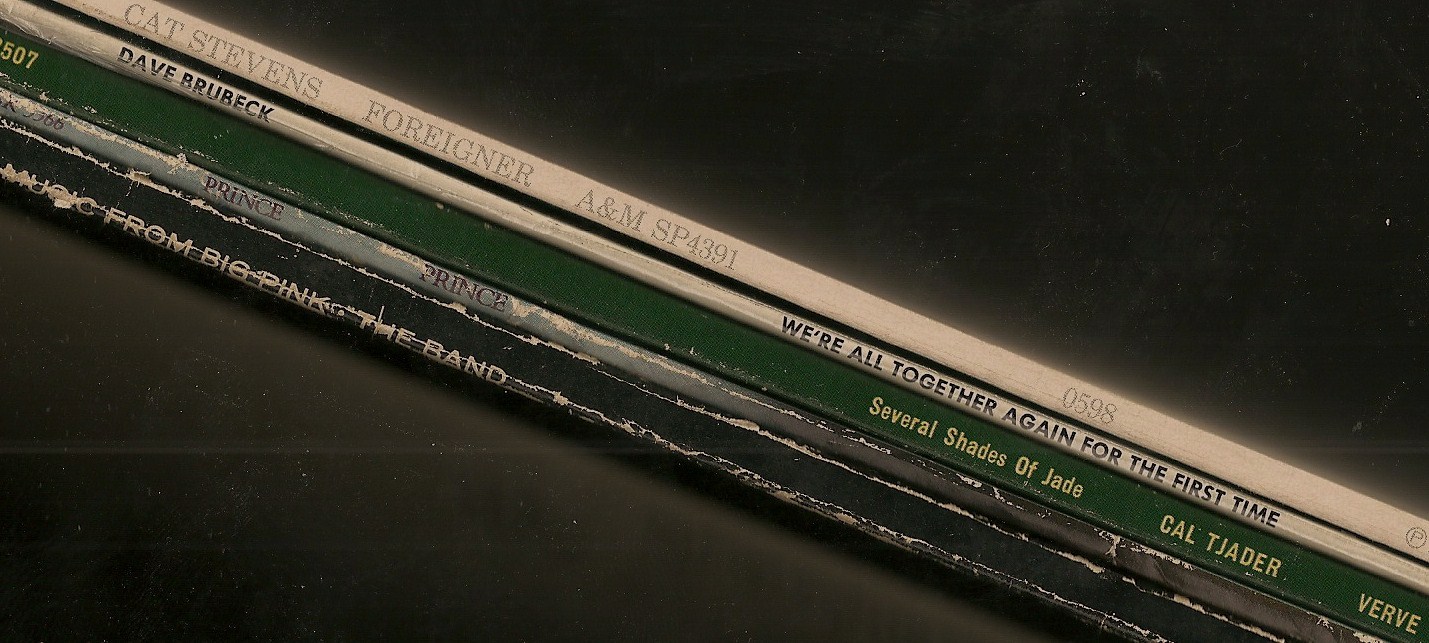
Cat Stevens — Foreigner (1973)

Filling up holes in the old Cat Stevens collection. Like all of his previous albums, this one's good, but not quite as good as the one that came before it. Still love the big budget folk rock production and his undeniably passionate performances throughout. The whole of side one is taken up by the now infamous 'Foreigner Suite' which features four regular old Cat Stevens songs (good ones, too) that are segued by doodly little instrumental half-songs. I love that sort of unnecessarily ambitious crap. The final song has the (now hilarious) little Joe Satriani/Coldplay bit — not an album highlight, but worth a mention for comedy's sake. Side two of the album just carries along in the same manner but it just doesn't sound as interesting without the willfully artsy aspect that side one has. The album closing song '100 I Dream' has got to be one of the single most uplifting songs ever. Take one look at some random lyrics: "Pick up the pieces you see before you, don't let your weaknesses destroy you." A sparse folk rock backing that mirrors his earlier triumphs and a multi-tracked harmony vocal and the deal is sealed. Good stuff.

Dave Brubeck — We're All Together Again for the First Time (1972)

The title is presumably a reference to Dave, Paul Desmond and Gerry Mulligan. It is absolutely top tier post-bop from a time when the stuff was frowned upon and in short supply. I don't know what it is, but Paul Desmond just sounds on fire throughout. Gerry Mulligan's composition 'Unfinished Woman' is a soul jazz rave-up — gosh dang, it's good. The Desmond feature on 'Koto Song' is hauntingly beautiful. Rhythm section of Jack Six on bass and Alan Dawson on drums is completely sympathetic to the dynamite frontline they're backing. There's even a super long rendition of 'Take Five' and Dave finishes the live set (recorded at two different dates in late 1972) with a solo reading of 'Sweet Georgia Brown' — completely appropriate, seeing as how it's very obvious that everyone involved was having a blast. Solid stuff. I need to explore Brubeck properly.

Cal Tjader — Several Shades of Jade (1963)

Really sweet find at a thrift store on this one. I did have this album, years back, on this two-fer CD. Overall, it looks a lot more gimmicky from the outside than it actually is. Because, for the most part, it's just Cal Tjader's group playing what they played, but with augmentation from a tastefully Lalo Schifrin-arranged orchestra. I actually didn't remember much of this album from previously, and that's surprising. Because it's actually really worthwhile. I mean, something like 'Song of the Yellow River' is just about as ahead of its time as something might get. Overall, this is probably one of the Cal Tjader albums most folks might guess is pure cheese — but after properly reassessing, I'd say it's among his best.

Prince — Prince (1979)

Sure, not his most enduring material, but there's a charm to the two early Prince albums. It's a brand of semi-disco R&B/funk that just doesn't really sound like anybody else. Because, while Lakeside and Slave were conceiving songs entirely in the studio, Prince was still writing in his bedroom. Hence, you get introspective seven minute things like 'I Wanna Be Your Lover.' It doesn't have the standouts that his first album had, but it does hang together a little better overall as an album. It has a very dated late-70's vibe to it that I must confess I like. A time when recording studios were a church of sorts and even a lesser Prince work like this one was still treated like a goldmine. Dah well, the record's good, but far from his best.

The Band — Music from Big Pink (1968)

The (other) album that the Basement Tapes begat. There's just something about this album that you feel. I can't really articulate it — but this is powerful music. I think it was George Starostin that said (or at least, he was the first person who proposed the idea as I knew it) that nobody really knows what these guys are talking about, but they are talking about some serious shit. And that comes through in this music. It's an epic collision of old meets new. Old timey ideals and ethics meet a newly discovered rocker interest in folk music and you get music that proposes something completely timeless — rare for rock music. I know it's the hit and the song that everybody knows, but I can still remember the first time I heard 'The Weight.' It is a godlike moment in music and one of my favorite songs of all time. Levon Helm's vocal performance is just about as good as it gets in my book. With my interest in Fleet Foxes reaching its most fervent phase, it's nice to go back and hear the roots. Jesus, this album is good. Makes me feel warmer just thinking about it.

The Zincs — Moth and Marriage (2001)

The Zincs' debut album is a sparser presentation of what they would become. For the most part, it's a dual jangly strummy guitar arrangement of esoteric pop songs. This one is a bit more acoustic-based than the albums that would follow, but despite the sparse presentation, the songs are just as good. There really aren't any standouts —besides Jim Elkington's bizarre lyrics— and that plays to the album's advantage, because it demands a full listen every single time. I guess this ultimately plays up Elkington's slant towards British folk rock because it does have the feeling about it that it's about the greater statement than its individual parts. Hard for a guy like me to dislike such willfully tuneful and strummy music.

Cocteau Twins — Four-Calendar Café (1993)

It sounds absolutely fine now, but I can only imagine how disappointing this must have been coming after Heaven or Las Vegas. In retrospect, it can be looked at as a very cliched stock Cocteaus sound. That sounds great these days because the band has been defunct for so long, but at the time, it must have bruised a few longtime fans' hearts. Still, Cocteaus doing "Cocteaus" is better than nothing. This album is notoriously subdued and lowkey in its production, but that actually plays to the success of mellower songs like 'Oil of Angels', 'My Truth' and the especially vintage-sounding number 'Essence.' Overall, not their best, but still a darn fine album.

Cocteau Twins — Head Over Heels/Sunburst and Snowblind (1983)

And straight back into the classics and my Cocteaus collection is complete. You can't fault albums like this. Sure, the band did better songs, but does this not hang together like a total masterpiece? 'Sugar Hiccup' is one of Robin Guthrie's most inspired moments, while 'Musette and Drums' creates the sort of building quality that most bands can only dream of. Yeesh, I mean, sure they were totally onto something new here —and would arguably repeat themselves for the rest of the 80's— but who cares when they were doing it this well? When you're in the zone, you want to stay there. And this is where theirs started.

Mojave 3 — Spoon & Rafter (2003)

After digesting —and really liking— Ask Me Tomorrow, I decided one was not enough, so I found this album used. I purposely went for this one because the first song is 'Bluebird of Happiness'. It's the only Mojave 3 song I've heard that's as good as —or, indeed, better than— Slowdive. A nine minute epic that channels Neil Young via-shoegaze, it's one of Neil Halstead's best songs ever. I just wish all of Mojave 3 was as good. The rest of the album does follow suit, in a matter of speaking. There are some twangy little ditties that toe the line between sleepy country rock and dreamy folk, but none of them have that insanely realized balance of emotion, intensity and restraint that that first track has (as the only sane person in the room asks, "What does?"). It's a lovely little album after the initial shock up front. But, I have to admit, without that first track, I would have scored the album significantly lower.

~Austin

Friday, September 23, 2011

What's New?: 9.23.2011

Really unassuming batch of greatness this go 'round. . .


Cocteau Twins — Blue Bell Knoll (1988)

Nothing special at all for the Cocteaus, but solid as hell regardless. By this point, the Cocteaus had become very influential, so I can understand the backlash of them doing an album that sounds exactly like them three years previous. And yet, nobody else managed to do it as well. Just listen to the dreamy fantastigasm™ on songs like 'Cico Buff' (this would have been a standout on any of their previous albums, too). The title track is dark and dreamy, while the last two tracks ('A Kissed Out Red Floatboat' and 'Ella Megalast Burls Forever') point the way towards Heaven or Las Vegas. I understand how somebody could overlook this album, but I don't understand how you could not count it among the band's peak material after hearing it. I think I might also like it so much simply because of the unfamiliarity of the material, as most of this album has not been compiled elsewhere. Top stuff from a band in top form.

Cocteau Twins — Victorialand (1986)

Very dreamy, even for this band. Most of the songs are awash with acoustic guitars, tons of delay (seemingly more than usual) and minimal percussion. The very first track ('Lazy Calm' — a perfect title) wins me over instantly. It's arguably the most Cocteau-ish song the band ever did. It's very calm, even for them and sits right next to the Moon and the Melodies very nicely. I actually really like that the band is mostly digging into calmer, less percussive territory here. I hesitate to call it the closest thing to a straight acoustic album that they ever did, but there you have it. It lends itself much better to Durutti Column comparisons than it does My Bloody Valentine. If nothing else, the relative sparseness of the material highlights Robin Guthrie more than usual and he's definitely playing in a 'more bang for your buck' mode here as he just hits these chord patterns over and over and just lets them float. Like a mofo'ing boss, I'd say. Play this for anyone who thinks that the Cocteaus didn't have diversity on their side. And I will say this again: 'Lazy Calm' is just absolute magic. One of their best songs, I reckon.

Brian Eno — Another Green World (1975)

'Tis a replacement copy. Let it be known, here and now, that I did give a (very) positive review to something that Phil Collins was involved with. Although I would imagine that ol'Phil had very little to do with the songcraft on these here selections and was only brought in to lend his drumming to the party, there you have it. For anyone wanting to know why Brian Eno is so revered, don't even play them this entire album —because it is most definitely a slow burning grower of an experience— just play them the song 'Sombre Reptiles.' That is, in essence, what Brian Eno has contributed to modern music. Just a few simple chords. But arranged in a loping, thoughtful way that makes two minutes and some change seem like the greatest piece of ambient music you've ever heard. Melodically lyrical and completely thoughtful, it is Eno's masterpiece. I could listen to it on repeat for hours. The rest of the album is darn fine, as well. Not quite as willfully weird as Taking Tiger Mountain —it's a bit calmer overall, with the entirety of side two having no drums whatsoever— it's still got that artsy quality to it, but mixed with Eno's ambient philosophies, making it a completely appealing, and convincing, mix of ambient soundscapes and pop sensibilities. He released better material as a collaborative contributor to other things after this, but he never released anything better under his own name. Defying time and trends, it is purely magnificent; and absolutely a classic album.

The Zincs — Black Pompadour (2007)

Saw these guys open for the Sea and Cake in San Francisco on the Everybody tour. At the time, I knew little of what to make if their esoteric jangle sound, but I actually really liked their set and thought they deserved to be playing higher on the bill. Definitely should have played after the Robbers on High Street — who were actually terrible, honestly, as their between song banter actually included a narrative from the singer about a waitress who "hilariously" misheard the band name as "Robbers on Ice Cream' — how hilariously pretentious to actually recollect before an audience of onlookers, you fake Macy Gray idiot (seriously, the skinny fucker sounded like Macy Gray. God, I wanted to punch him). Much in contrast to the Zincs' between song banter (the one comment I remember, besides song title introductions from Jim Elkington, was, "We drove down from Portland yesterday — that's really far! I loved it though!" — and then launched into a tune from Dimmer). I remember wanting to buy the band's albums right then and there (I was working on a budget at the merch stand), but, over the years, I've admittedly just forgotten. I have fond memories of the band playing 'The Mogul's Wives' and being pretty darned impressed as far as seeing a bunch of guys I had never heard of before recreating these wonderful Television-style dual jangle interplay guitars while Jim did this funny little dance while he was playing. The band honestly didn't seem to care that there was maybe fifty people paying attention. This album kicks butt. It's like the more jangly Sea and Cake material (appropriate, as it was recorded by John McEntire at his own SOMA studio; and helped out on various instruments), but with a bit of weary midwestern twang and seriously weird lyrics. Think Wilco, but more fun. It all makes very little sense when you consider that Jim Elkington is British and had only been living in America for a few years at this point. Really unique music and just a shame that they didn't get some notoriety off this material (in one of the bitchiest of bitch moves they've ever done —and probably a contributing factor as to why the album didn't get more notice— Pitchfork gave the album a mediocre score amidst one of the most worthless reviews I've ever read — case in point of the website trying to outcool their subject matter by pointlessly one-upping it). Freakin' lovely music, man. Smart — but not smarty pants. And just awesome how it straddles 'pop' and 'art' so seamlessly.

The Zincs — Dimmer. (2005)

One of the most complete jangle albums of the last decade, honestly. I'm sorry I waited so long. I distinctly remember three songs that the Zincs played when they opened for Sea and Cake off this album: 'Moment is Now!' (because they opened with it), 'Passengers' (because Jim Elkington played harmonica) and 'Beautiful Lawyers' (because it was so reminiscent of the Sea and Cake's jangly perfection). Things build and build in a very pleasantly jangly tone for the bulk of the album until they hit the ballad 'Sunday Night' and it just feels like one of those Neil Young-esque, late night, moment of clarity occurrences that pop up every so often with good music scholars. Overall, I have listened to this album several times over the past few days and I have to say that the band, as played to me on that spring night several years ago, is just as captivating on record as I remember they were in person. Again: I'm sorry I waited so long. I've really missed out.

Mojave 3 — Ask Me Tomorrow (1996)

I received Puzzles Like You as a promo when I worked at Tower Records and I remember being really excited to be properly introduced what is essentially Slowdive v.2. I hated it. For years ever since, I've written off the band as "shitty Slowdive with twang." A friend recently introduced me to a version of 'Bluebird of Happiness' that made me re-think things. I know I've heard this album in passing before, but I just can't say where. And sure, going in after Pygmalion (and its subsequent deluxe edition), it's just not as good. But, leave all that baggage at the door and this is a darn fine little whispery dreamy folk rock album. Reminds me a lot of Neil Young's Harvest Moon, in fact (add some reverb and you're there). Think Mazzy Star, but less "trippy man" (not that being "trippy man" isn't good). Hearing it from where I am now, 'Love Songs on the Radio' is a downright classic in my book. The boozy twang of 'Tomorrow's Taken' is as comforting as the most relatable of classic country, but with a fantastically surreal vibe to it that only former-shoegazers could pull off. Overall, it's Neil Young for dream pop fans. No wonder I like it. Again, I'm sorry I waited so long.

~Austin

Sunday, September 18, 2011

What's New?: 9.18.2011

A compendium of AWESOME!!!

Ok, that may have been a little much. . . But some good stuff, for sure. . .

Love Tractor — Themes From Venus (1989)

Oh, Love Tractor, you are so deliciously jangly! This is a later one with more of a focus on vocal tracks, but it starts off with the surf 'n jangle pop monster 'I Broke My Saw', so everything is ok. There is a bit more of a rocked up punch to the production, but for 1989 standards, this was super artsy. The instrumentals are all on par with the band's early material and it's just awesome to hear something like the magically melancholy 'Hey Mess' morph into the layered jangly good time instrumental 'Nova Express.' Found this one on a whim, but I'm really glad to have added it to my collection. Hidden gem, for sure.

Waxing Poetics — Hermitage (1986)

A total obscurity from the backburner of the college rock stovetop (not to mention, the Roadrunner Records catalogue). I only glanced at the back cover of this because I didn't know what it was. Finding that I recognized two rather significant names (Mitch Easter, and more importantly, Mike Mills), I was intrigued. Sure glad I took a blind chance on it, because I found a pretty good little jangle album. It does have a bit of a power pop influence to it, and overall, reminds me very much of early R.E.M. Highlights for me are the moody 'Friday's Child', the Ocean Blue-ish 'This Parade' and the very R.E.M.-esque title track. Great stuff for jangle fans; shame it's pretty much an obscurity.

Brian Eno — Taking Tiger Mountain (By Strategy) (1974)

Try to be weird and poppy at the same time, end up sounding like this album. This is a re-acquisition, of sorts. God, he was ahead of the curve. 'Third Uncle' still sounds contemporary. It's supposed to be a concept album, but I've never actually sat down and figured it out. The lyrics are jut too trippy, honestly. In a good way, but sheesh. I'm not figuring that wacky shit out. I mean, what can you say about this album? If the song is totally calm and catchy, the lyrics are completely bizarre ('Put a Straw Under Baby' and 'Burning Airlines Give You So Much More' for instance), but then there's songs where things are just plain weird and out of place ('Third Uncle' and 'China My China'), going off into these noisy, atonal tangents that predict any number of post-punk sub-genres (confusingly, a good three years before such a thing was even possible!!!??!!!?!). Through it all, there's a strange sense of melody going on that is just fantastic. The title track points towards his ambient future, and overall, it's hard to imagine he could get even better.

Brian Eno — Ambient 4: On Land (1982)

Eno's late 70's and early 80's ambient albums are works of sheer mastery. So good, in fact, that people who otherwise don't like a good ambient segue respect the hell out of them, if they don't flat out like them. I have been more and more open to the annals of ambient music these past few years and, I have to say, after years of disregarding Eno's non-pop albums and ambient stuff in general, I've really come to admire his work the most. It has a resonance —dare I say, a soul?— to it that I have yet to find with most other works in the genre. This one starts off with one of his best songs ever on 'Lizard Point.' A shorter piece, it characterizes this album, as it has a clear main theme that is not only discernible, it's actually kind of catchy. The album builds and builds until the second to last track ('A Clearing') and it's clear that this is very emotional music for its creator. He has better ambient albums, but not many.

The Horrors — Skying (2011)

This album has already been addressed. It is a very nice double vinyl edition, with a gatefold cover, full color inner sleeves, heavy 180 gram records and a digital download redemption. I expect nothing less from the folks over at XL.

Shelleyan Orphan — Helleborine (1987)

Completing my collection of the early Shelleyan Orphan stuff. It strikes me as "Baroque Pop" in the best sort of way. They have that string and woodwind accompaniment, but with an acoustic strummy guitar base that just appeals to me. It's like post-punk folk. This is their first album, and probably their most produced one, oddly. Although it contains arguably their best song ever with the seven minute album closing epic 'Melody of Birth.' Side two of the album is definitely the overall stronger one, but it's hard to call the album anything but a pure success, with other highlights like 'One Hundred Hands' and 'Jeremiah.' Fantastic stuff from a sadly forgotten band.

Aztec Camera — Still on Fire EP (1984)

Hard to see that spine on the scan above, but this is the 12" I picked up. I'm the last person that can claim objectivity when it comes to Roddy Frame, as to me, the guy practically invented my favorite brand of rock music, so take that as you will. This one contains the fantastic single from Knife, along with two live tracks that I previously had on an American ten inch EP, along with live versions of two High Land Hard Rain classics, 'Walk Out to Winter' and an absolutely stunning 'The Boy Wonders.' Sure, I'm rating it on the strength of two (new to me) live renditions of songs that I've known for years, but hey, when you're a whore, you're a whore for all of it. Hard to believe a band that sounded that good and that passionate got so. . . well, shit on. This is the sort of thing I collect vinyl for. Now I just need to track down that extended nine minute 12" mix of 'Walk Out to Winter.' And those Love-era b-sides. Oh yeah!

Cocteau Twins/Harold Budd — The Moon and the Melodies (1986)

It's good — really good. But, besides the straight ambient songs, the proper songs are really no new revelation for the band. Still, when you're hot, you're hot. And it should come as no surprise that amongst the proper songs, 'Sea, Swallow Me' and 'She Will Destroy You' are pretty much in the top tier of Cocteaus material. The ambient tracks are really, really good. But, they do sacrifice the cohesiveness of the album. It would have been nice to follow Bowie and Eno's precedent and do all the pop songs on one side and all the ambient stuff on the other. But, no points taken away for them trying something different. I want to say I've heard this album in passing before (shoutout to Chris Hubbell when he was in one of his mellow moods, perhaps?). I've neglected this post-Treasure Cocteaus material for too long.

The Soft Boys — Underwater Moonlight (1980)

I've told myself I would buy this album without ever having heard a single note of it if I ever saw it, quite literally, for years. Well, that day finally came and I made good on my promise to myself. It's been said that the Soft Boys were the very first jangle band, and after hearing this, I can't properly agree with that, but I definitely understand that they were important as hell to the scene. It's a bit more new wave all around in its philosophy. But definitely has moments of 12-string jangle that are completely out of place for 1980 (and yet, the Feelies released Crazy Rhythms the same year — just sayin'). I'd actually place this one very much in with Paisley Underground crowd from the west of the US. It has absolutely nothing to do with that scene, but does its sound not fit right in? The title track here is a totally awesome Byrds-revival jangler that must have sounded completely wrong in 1980. But, oh so right. Robyn Hitchcock went on to more notoriety after the band, but it has never held my interest much. This stuff is like jangle pop filtered through an odd druggy stream of conscious early 80's haze. Gotta love it. Quintessential stuff for me.

Travis — Good Feeling (1997)

The first track is 'All I Want to Do is Rock' and indeed, amongst the overdriven guitars and gutty vocals from Fran Healy, this is the band's most Brit-poppy album. The tunes are there, but hearing it now for the first time in retrospect, it is very dated. Much of what made the band so great from The Man Who onwards is not really present (or, at least, not very apparent). Most of the songs have big guitars up front and semi-whiney vocals. The reggae rock of the title track hints at the songcraft that the band had up its sleeve, while 'Tied to the 90's is a surprisingly lucid realization of the band's own mortality. The second half leans on ballads heavily and that's where the hints of the greatness that was to come shone through. Still though, easily the band's worst album, even though it does hint at where they would go.

Travis — Ode to J. Smith (2008)

Within the first three tracks ('Chinese Blues', 'J. Smith' and 'Something Anything'), it's a pure and complete contrast (in a good way) with Good Feeling. These three songs rock out more than anything the band had done since that first album, but they are more polished, more layered and just all around more well-thought out than anything on Good Feeling. Granted, for the first third of this album, the band's guitars sound more ferocious than they have in a decade, but their songcraft is as good as ever. So, when things evolve back into their now-stock jangle sound on 'Quite Free', it sounds natural and fluid. I do prefer the calmer second half of the album, but you have to really marvel at how good Travis has become at what they do. With this album, they have become what Coldplay wishes they were: a pop band that actually plays challenging riffs and meaningful changes. They are this generation's interpretation of Crowded House.

Keith Murray — Enigma (1996)

Another mostly Erick Sermon-produced mid-90's gem. I did have this one on cassette in high school (for car listening, of course), so I guess this is a re-acquisition. God, the beats on this album are just. . . wow. I never would have arrived at this at the time, but when I started making beats in late '98, I was subconsciously trying to make beats like on this album. Jesus, 'The Rhyme'? Do you know how many of my beats sound like that? That song is so good, I didn't even realize I was copying it. Keith is on some complete and pure nonsense on the mic the entire time. It's like the beats are these bass-heavy, vibed out mellow masterpieces (think G-funk, but with better drums) and Keith is saying stuff like, "Fuck you, comin' from the 'Fuck you' man" the entire time. So, yeah. But, good beats are worth their weight in gold and this album still sounds great. The last two proper tracks are surprisingly lucid, humble as they may be as attempts at poignancy. 'To My Mans' has a beat that should make any MC jealous while 'World be Free' is an unnecessarily aggressively meditation on the awesomeness of travel that only a hiphop album could pull off. An early Jay Dee production on the masterful Bill Evans-sampling 'The Rhyme' remix closes things out and I have a really hard time not loving this album, even after all this time.

Cocteau Twins — Milk + Kisses (1996)

As a first step taken to dive into that later Cocteaus material that I felt I was neglecting, I saw this album used on the shelf and went for it. I know some versions of these songs from the Lullabies to Violaine set from a few years ago. But, mostly, I was marveling at how good the Twins still sounded so late in their career. Nothing changed really, besides nuances in production, and they're still able to sound undeniably like themselves. 'Half-Gifts' totally rips off 'Suzanne' and still manages to sound great. 'Seekers Who are Lovers' is the sort of vintage Cocteaus song that must have sounded like it was from another planet in 1996. I wish they would reunite, honestly.

More shortly on the way. . .

~Austin

Tuesday, June 28, 2011

What's New?: 6.28.2011

I don't know, man. I can't explain this combination. . .


Big Boi — Sir Luscious Left Foot. . . The Son of Chico Dusty (2010)

I mean, I get that Big Boi is trying to do something different and establish his name outside of OutKast as his own brand, but this sounds kind of crappy, for the most part. Musically, it's interesting at times, for a synth-heavy production. I guess that's my main problem with it: OutKast used to stand out musically. A groundbreaking swirl of live instruments, samples and electronic beats. The sounds were modern, but natural. But here, it just feels like Big Boi is emulating, instead of originating, sounds. I was actually one of very few people in the world who preferred his half of OutKast's precedent-setting "two solos packaged as group album" Speakerboxxx/The Love Below. In fact, I've always contended that Big Boi's Speakerboxxx was actually, musically speaking, the more boundary-pushing of the two albums. And his tracks on Idlewild (an album that I actually came to admire, despite feeling fairly lukewarm about initially) had an incredible grasp on the pop and "weird" aspects that OutKast's music had always possessed. But this album. I dunno. It feels, at times, like Big Boi doing a send up of the contemporary music climate's obsession with ultra-shiny, somehow retro-80's, synth-heavy production. And granted, his view of this sort of thing is a much more unique and melodically rich interpretation, as an OutKast fan who bought ATLiens on its release date and sat uninterrupted staring at the stereo to take it all in that night, I can't help but feel like he's regressing. Sure, there's grooves and nice little hooks throughout, but where 'The Way You Move' achieved its success because of similar vibes, it felt genuine and humble. Pretty much all of this material seems to strive to recapture that same vibe, but it feels a lot less sincere. All the porno references and juvenile-minded skits just don't sound convincing coming from a guy that's approaching 40. Big Boi just seems to be going through the motions for the most part. There's nothing even as substantial as 'Morris Brown' here and I never thought anything from the OutKast camp would dip lower than the Idlewild album. The only song here that even approaches that old OutKast feeling is 'The Train Pt. 2 (Sir Luscious Left Foot Saves the Day)' which finds Big Boi and Organized Noize in absolute sync in a moment highly reminiscent of Aquemini. I held off on buying this one when it was new. So now, roughly a year later, removed from the hype, I can't even begin to express my disappointment. Sure, for overproduced, crappy modern synth pop, it's top tier. But for someone from the mighty OutKast to stoop to that level and release something as lacking in substance as this, I can't help but feel like a little bit of my musical soul has died. Because most of this music is devoid of just that. I'm baffled by the overtly positive reviews it initially received.

Mark Isham — Miles Remembered: The Silent Way Project (1999)

A recent nostalgic revisit to David Sylvian's Secrets of the Beehive made me listen to Mark Isham's playing and think to myself that I needed some of his own albums in my life. I saw this one for very cheap on Amazon and figured it would probably be the best gateway into his music: I was curious about his playing and I already loved Miles, so it would be a very easy listen. After reading a lot of reviews of Isham's albums and knowing that he was generally classified as a "new age" musician, I have to admit, I was apprehensive. However, if that is the case, this album betrays his other works. Because he is basically playing a very faithful rendition of electric fusion-era Miles. With a couple of surprisingly convincing originals inspired by Miles' fusion era (the screaming, busy fusion of 'Internet' and the outright jaw dropping ambient ballad 'Azael') and a radical reworking of 'All Blues', the source material here is all covers of Miles' 1967-1973 material. A seriously funked up 'Spanish Key' (which really plays up the explosive nature of the tune) and a downright wonderful reading of 'Ife' don't hurt things at all. Honestly, going in expecting new age music, the closest thing here is the rendition of 'In A Silent Way' which he brilliantly medleys with 'Milestones.' But even that double feature has arguably a better grasp on space and ambiance than the original did. Peter Maunu and Steve Cardenas are great on guitars, doing their most appreciative John McLaughlin and Pete Cosey imitations the entire time. Overall, really hard for me to dislike an album of somebody playing music in this period of Miles' career with so much care. Not mindblowing, but enjoyable as heck.

David Crosby and Graham Nash — Crosby & Nash (2004)

It does feel a little bit cheesy at times. Still, knowing that these guys really are just hippie idealists, the tunes come off as light, but having a naive appeal. I am a bit disappointed that, of the two discs contained here, disc one is so top-loaded with songs not written by David or Graham. It should be no surprise, then, that the first truly interesting song doesn't pop up until track three (Crosby's vintage sounding 'Through Here Quite Often' which comes complete with the awesomely naive lyric, "They say don't talk to strangers, I say why the hell not?"). Overall, the production is very samey and unfortunately compressed (say goodbye to all those dynamic harmonies from the old albums!), but the new tunes written just by David or Graham are quite nice, I must confess (in fact, Crosby's 'How Does it Shine?' which closes out disc one is completely vintage and totally good). Very comfortable, folk rock sound. Not amazing, but definitely good for fans of the duo.

Cocteau Twins — Treasure (1984)

Always fun to revisit a classic. I know I've had this album before, but I don't know what made me part ways with it. Anyway, it's a winner, through and through. Everybody seems to love the everloving bejesus out of 'Lorelei' and why not? It's definitely one of the Cocteau's catchiest moments. I've always thought 'Otterley' was a really underrated song. I would like to officially propose it as the starting point for 'Falling Through the Ice' by the Ocean Blue. 'Pandora' is great too, isn't it? Yeesh, what great music. I can't even imagine how unique it must have sounded at the time. Wonderful stuff.

~Austin

Wednesday, June 22, 2011

What's New?: 6.22.2011

More musical odds and ends. . .


Gary Numan — Telekon (1980)

I avoided anything post-Pleasure Principle for years, again, because of what I perceived to be an authority (but which I now realize is just a source for good information — a place where I should probably just ignore the editorial views). I mean, sheesh, this is Gary arguably doing the Pleasure Principle part two. But hey, last I checked, the Pleasure Principle was pretty much a one of a kind, era-defining album. So, to have the same guy that did that do a not quite as good redux doesn't really strike me as a bad thing, altogether. And hey, I'm essentially right, because Telekon is basically the same sort of detached, exquisitely layered, early synth pop — all it lacks is the one knockout blow that Pleasure Principle had with 'Cars.' Telekon captures that epic keyboard mini-symphony sound that Pleasure Principle captured so well initially. It's not more produced or more shiny or lacking hooks or any of the usual cliches that usually apply to albums following huge hits. It does lack the one big hit, but that's only because I'm looking at it in retrospect. I imagine, if I was there in 1980, anticipating it after Pleasure Principle, I'd be pleased as punch with it. And, with the inclusion of mini-post-'Cars' masterpieces like 'I Die: You Die', 'The Aircraft Bureau' and pretty much the bulk of side two, I find no faults with this one. And, perhaps most importantly, I see myself going back to it often just because of the unfamiliarity of the material.

Gary Numan — Dance (1981)

And this one, also despite lacking a big 'Cars'-esque hit, should be as highly regarded as anything else in the early run of Gary Numan's catalogue. Sure, it mostly ditches the analogue synths and the adopts a very pronounced fretless electric bass sound, but that's just the thing, isn't it? For the first time since arguably Replicas, Gary is evolving and getting more interesting. There is a very slow, slightly dark undertone to the whole thing. But the sheer scope of the album has to be marveled at. There's not one, but two nine minute epics ('Slow Car to China' and 'Cry the Clock Said') that are just about the best things with Gary's name on them that I've yet heard. Overall, not my favorite Gary Numan album, but easily number two, just because of the new sounds it contains. There's shades of OMD, Japan and old Numan material on this album, combined with a new sense of ambition and a grasp on space and longing melodies. Cool stuff.

Led Zeppelin — Houses of the Holy (1973)

Probably the best synthesis of Zeppelin doing the hard rocker and folk rocker thing simultaneously. They got bloated after this, but for this album, everything feels genuinely exploratory and new. The fully successful integration of keyboards into songs like 'Rain Song' and especially 'No Quarter' only ups the ante in the debate of the people versus Led Zeppelin as original songwriters (hint, they certainly didn't nick those riffs from anywhere that I know of). They do fall back on the old blues cliches a time or two, but less than ever; especially for a Zeppelin album. I will begrudgingly admit that this is a damn good album, and probably the band's most diverse and just best overall.

Pink Floyd — Music from the Film "More" (1969)

More early post-Syd, pre-Dark Side Floyd. Arguably my favorite period of the band. I'm already a self-confessed fan of "mess" and/or "transitional" albums and the Floyd made a few of those in these years. It's got some more rockin', strangely garagey moments ('The Nile Song') alongside purely instrumental, nearly ambient goodness (the excellently floaty 'Quicksilver' and a lot of the second half of the album). So, yeah. Strange times and lots of druggy sounds. I dig it. The lyrics aren't as preachy as they would come to be and the music is a lot more interesting than the guitar jam-focused affair that the Floyd would become in a few years (not to say that that wasn't good for what it was; I just prefer a little more diversity for diversity's sake). Really good stuff; and, if nothing else, just goes to support my "Pink Floyd as early progenitor of post-rock" philosophy even more.

Echo and the Bunnymen — Crocodiles (1980)

No excuses for not having this one around previously (especially since I've had the rest of the band's 80's output in my collection for years). I recall hearing it, roughly ten years ago, thanks to Reno legend Chris Hubbell, ad nauseum. So I definitely recognized a chunk of the songs on the proper album. But, wow, when I go back and sit down with it: quite a striking debut, to say the least. It's like Joy Division swirled around with some outright psychedelic moments. Fantastic post-punk stuff and it's hard for me to grasp that this was only the band's first album and that they had so many more highlights ahead of them. A classic of its era, that's for darn sure.

The Comsat Angels — My Mind's Eye (1992)

Finally, a physical acquisition after years of only having it digitally. I will maintain the same thing that I have since I first heard it: it's overrated by quite a bit. The band doesn't help either. Going around, raving about how they just loved recording it. Yes, it's good. Very good in comparison to some of their previous albums, but it's not like this thing is even seeing Sleep No More or Fiction (and, in fact, I'd argue that the Glamour is actually the better of the Comsats' two 9o's albums). There's no bad songs here and this deluxe (or, more like, "revised") edition on Renascent is the definitive. It definitely sounds like the band trying to be less intentionally commercial, but it does have a bit of a cheesy sound at times (especially in the guitar effects). Still, it is very consistent and, for the first time, there are some downright rock out moments that finally fulfill the urge to do so that the band had seemingly had since its early days. Overrated, but still worth the time and money.

Ben Webster — See You at the Fair (1965)

Ben Webster was one of the grandaddies of bebop tenor sax and it took him a long time to finally be able to lead smaller group sessions. But when he finally was given the opportunity to do just that, he just started rolling out album after album after album of downright classics. Mostly leaning on the smooth jam/classy ballad side of things, he honestly never sounded better. I guess file this one into that same category because it is completely in line with the precedent with its conspicuous greatness. Hank Jones is ace on piano and Ben sounds downright godlike for most of the material. He plays these long, melodic runs that aren't necessarily flashy, but jeez oh man, are they inventive (and, not to mention, completely awesome). The best part about the music Webster was playing in the later years of his life is that it retained a strong blues influence, without sounding irrelevant. He was genuinely inspired during these years and I'd like to think that he mostly stuck to ballads because he was wanting to be purely melodic and intentionally beautiful (mission accomplished). This edition of the album on Impulse is the definitive, gathering up bonus tracks from a label sampler and the best of Webster's features on Oliver Nelson's More Blues and the Abstract Truth. Just glaringly awesome stuff.

The Cocteau Twins — BBC Sessions (1982, 1983, 1984, 1996)

This magnificent two disc set definitely presents the case for the Cocteaus as one of the quintessential post-punk bands to emerge from the whole thing. The first tracks here are from a John Peel session in mid-1982 that predates the release of the band's seriously underrated first album and they find them full in blazing, wah-wah'd out drum machine glory. The last of the 8o's sessions documented here finds them running through three tracks from Treasure about a month before the album was released and sounding like they had the absolute true believer faith in the material (in fact, I'd nominate the version of 'Otterley' as played here to be the definitive). The two sessions from the 9o's that round out disc two are nothing if not intriguing. They provide a view of the band's neglected later day material with a more immediate take and, despite the drum machine being absent, fit right in with everything else here. And, if nothing else —amongst a smattering of rarities— three of the Cocteaus absolute best songs ever get two renditions a piece (that'd be 'Hitherto', 'From the Flagstones' and the epic 'Musette and Drums'). Really spectacular stuff.

~Austin