Tuesday, December 21, 2021

Excerpt.

The Announcement.

Their first attempt at direct communication with us: it scared everyone greatly.  Hospitals were overwhelmed.  They turned me away because I did not have any apparent physical injuries.  I panicked with such intensity that I was convinced it was another heart attack.  I’m not sure if I slept for about three days afterwards.  They knew it would be jarring and have a staggering effect on Earth.  Going back and listening to it now, their approach was the right one.  They said everything we needed to know.

I had spent most of the summer in Eureka and the whole trip had a sense of somber finality to it.  I wasn’t forbidden to go there, but even I knew I was getting too old for such trips that served no purpose, except to satisfy my nostalgia.  I was supposed to be mature and responsible and not so carefree as to make such flighty, impulsive choices.  I could play basketball anywhere.  It didn’t need to be on that court.  So, on my way home, I stopped at a record store in Willits and bought the new OutKast album as a sort of pity present to myself.  It was the perfect soundtrack for the drive back and for my summer overall.  I loved it immediately and listened to it pretty much everyday for the following three months.  

I’m only telling you this so it’s easy to understand: when that transmission happened, I knew ATLiens backwards and forwards and I was absolutely sure that’s what I was hearing.  And yes, definitely my memory is accurate: without the major triad, it totally started off like the opening seconds of “Two Dope Boyz (In A Cadillac).”  

They said “Earth people” though, so I knew something was up.

It was midnight when the first one started.  I had just fallen asleep.  It woke me up immediately for two reasons: 1) It was loud and 2) I had put Inspiration Information into my CD player, not ATLiens why am I hearing ATLiens is this what overdosing on music feels like?!  

I guess some people didn’t have any electronics close enough and assumed it was some police operation in the distance, probably a contributing factor to the initial skepticism.  Most of my neighbors went outside to make sure it wasn’t just them that had heard it.  Besides an emergency notification acknowledging it on our smartphones, there was no formal media coverage for at least an hour following the thirty three seconds of silence.  

When they finally got on it, you better believe it was non-stop coverage.  In some of the more ridiculous analyses, the “rational answer” sounded just like the “crazy conspiracy theory” to me.  Glass and smoke was the name of the game and these were some of the shiniest of ring-blowers.  

In their defense, I remember agreeing that the message itself was straight out of an old monster movie.  Pretty unbelievable stuff.  I was a little bit offended that I was supposed to take the sender of that message seriously at all.

And so it went for the next few days.  In all of the media, we were told that it was a hoax of the most villainous variety and that the culprit would be found and punished, oh so punished.  “Experts” were brought in from every angle you could bend.  They all painted themselves as Holmes to the perpetrator’s Moriarty.  

They’re the ones who started calling it “The Announcement.”  Read straight from a script no doubt.  

I remembered how well they had managed to bury Oumuamua in manipulative disinformation.  I knew back then they weren’t ever going to tell us the truth, but this was much better content.  Even now, I’m not cynical enough to deny that I was totally and thoroughly engaged.  Things were finally getting good.  

As promised, it was retransmitted.  The second one began exactly ninety six hours after the first.  I was hoping to hear something different.  Once was enough for me, but it was even more menacing the second time.

And then the power went out about five minutes later.

I was in my bedroom and I could hear my neighbors scream and gasp through the walls.  I joined them.

Up until then, most people knew it was a hoax.  For a few hours I did talk myself into believing that it was “the Dutch” (or whoever was the propaganda target of the time) and I remember falling asleep as the sun was rising, while trying to listen for machines or explosions that never came.

To be honest, I felt a lot better after I woke up on Christmas day.  The power was still off and nothing else had really happened.  

Initially I was like, “Yeah, they’re punishing us.  They always find a way”, but most of my neighbors were more open-minded and at least half of them admitted that they believed we were in the process of being contacted by aliens.  

They sounded utterly ridiculous to me.  Even now when I say that, I feel a bit silly.  I wasn’t sure what to believe, but it definitely wasn’t that.

There hadn’t been much traffic around where I lived anyway, but it really got quiet after the power went out.  

I much preferred it, though I did miss being able to listen to my headphones, especially on my walks.  I taught myself some chords on my kalimba and managed to suss out the “I Want You” melody, and that was probably the best thing for me at the time.  

I had issues already, but this constant barrage of mental chess matches was of no help whatsoever.  I kept telling myself that it was real and that the truly insane person isn’t aware of their own insanity — as I sang makeout songs to myself, whilst awaiting the explosion of the moon, which I had been assured (twice now, thank you very much!) would definitely be happening by a voice that came from inside the radio and the TV and my headphones and my toothbrush and yes, even my toaster somehow.

Taken from the book "It Was True: A Collection of Recollections About First Contact With Sialogea, as told to Andy by Dulce"

Tuesday, May 11, 2021

they sent me YOU

 you used to speak the truth, but now you're liar.

you used to speak the truth, but now you're clever.


stay clever.  act like nothing's wrong.


-gaa

Thursday, January 9, 2020

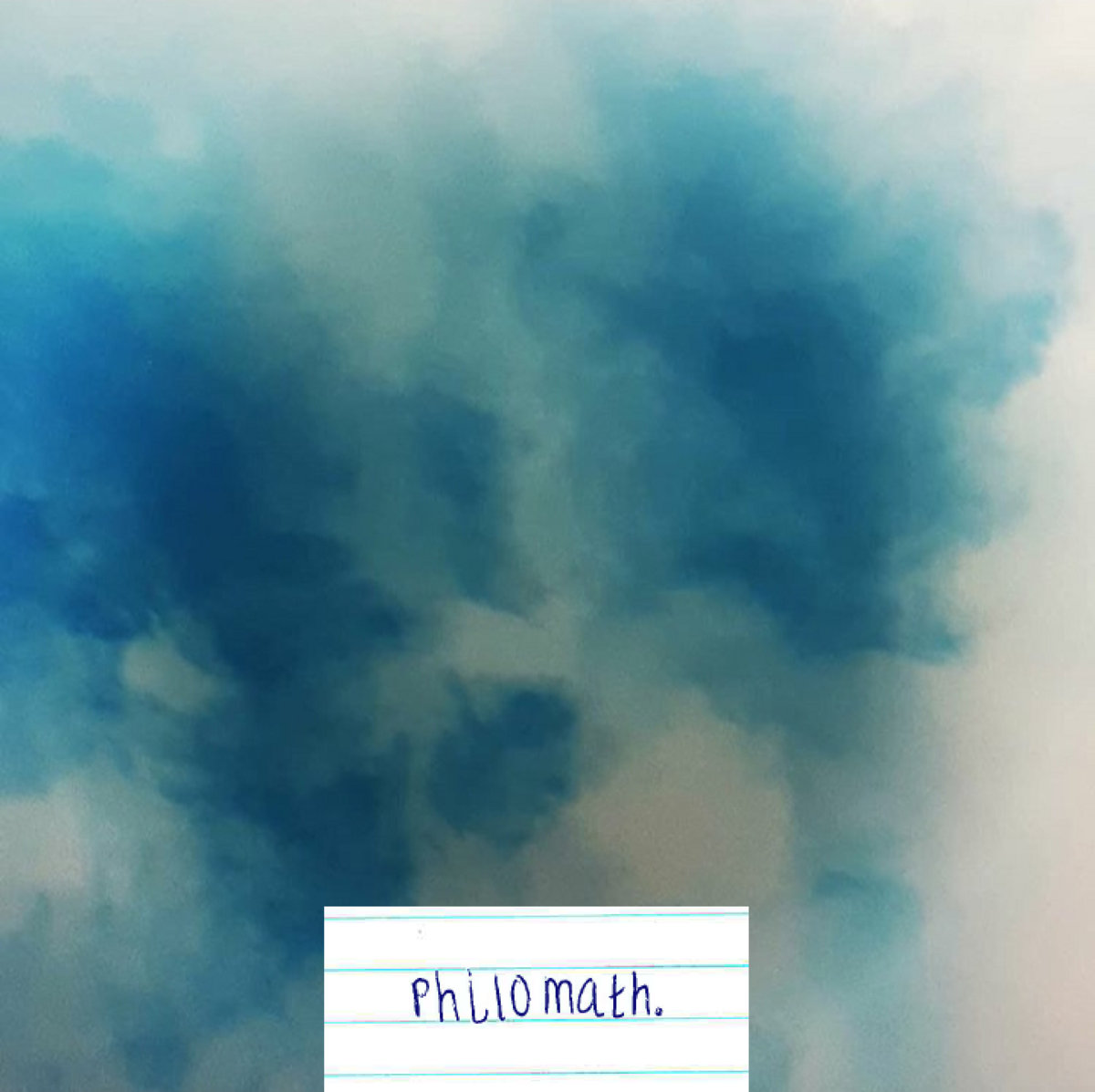
Philomath. liner notes


ever since i can remember, he's talked about "that feeling."  what songs give him "that feeling", what bands and artists remind him of "that feeling" most often, where he was when he first experienced "that feeling" with a specific song or album, et cetera.

yeah, like all things he's fascinated by, andy just won't shut up about it.

j, on the other hand, quite literally does not give a fuck. he will call you a "pansy ass f*ggot" if you even admit to liking certain music, nevermind letting it have "that feeling" on you. i told him prodigy from mobb deep was not intimidating in his rhymes, but in fact, very intellectually interesting and that his rhyme schemes were fun to study. he predictably called me a "gay ass."

but j, even though he will never admit it, is in fact quite intrigued by the idea of music resonating and being emotionally moving.  upon hearing 'shook ones', he will jump around and recite the lyrics in his hardest faux-nyc b-boy stance. he doesn't understand that getting amped up and excited is actually the music resonating with him in a very profound way.

he doesn't understand because he is, after all, a child.

so how the hell did these two manage to collaborate on Philomath. and actually make something beautiful, ugly, sad, exuberant, and ultimately, extremely resonating and coherent?

there was a time when the two of them refused to even acknowledge the other's existence.  and, for even longer, one was quite angry and abusive towards the other (i think you can probably guess who was who in that scenario).  but they both experienced the same upbringing.  it was probably inevitable that they would both arrive at the same conclusion that those summer vacations were invaluable in providing respite and, most importantly, insight.

insight into what it was like to not have that sense of impending doom all the time.  insight into what the beauty in a lot of music was actually about; not just speculating on it.  insight, ultimately, into what we could be.

andy told me years ago, upon reading an interview with him, that he wanted more than anything to hear david axelrod write arrangements for an entire outkast album.  although hiphop moving towards a more conventional mode of musician-based music production will always seem like a radical idea in the larger picture, andy's thought wasn't that far-fetched.  after all, axe had long been a sample favorite in hiphop and he even got ras kass to rap on his comeback album.  but still, that's just how andy thinks: in the larger picture.  he doesn't understand that old jazz man axe coming in to talk shop and collaborate with andre3000 and his prince obsessions probably wouldn't pan out.  he simply sees two of his favorite music makers who have given him "that feeling" more than any others and figures that, when they collaborate, it will be multiplied accordingly.  he thinks big, not practical.

when he first told me that he wanted to make an album about philomath, i told him to talk to junior about it because that was always his favorite place too.  andy, being the wide-eyed enthusiastic person that he is, immediately just jumped into it: "junior, what beats do you have?  what do you think of this idea?  do you think we can do songs about basketball?  is there any way to make it sound like the wind going through the high trees and the water running in the creek at the same time?  you remember that, right?"

and on, and on.

much to my surprise, j just kind of shrugged it off and told him that it seemed like, "a cool idea, i guess."

they didn't talk directly about it again for another three years.

andy just started to develop a new song one day and, in a very uncharacteristic manner, announced that he had begun to work on "me and junior's album."  i don't think j was aware that they had even agreed to work on anything.  uncharacteristic of him to take that initiative, but typical of him to be so idiosyncratic about it.

that song was 161.  i always knew andy would eventually write themes for all of my grandparents.  he had written one for my maternal grandfather around the time of his passing years ago before andy even knew what a major seventh was.  when andy first started to get the chords in order for 161, he just kept saying, "the way he walked was so happy."  and he's right; Donald Woodrow Anderson, Senior walked like he knew nothing and everything.  free of the worries of the world and simultaneously aware of it all (and therefore, prepared for anything).  whether he actually was or not didn't matter; he could be walking down the hall of the philomath food bank (which he founded) to help a patron, or he could be walking into the grocery store to get cat food.  it didn't matter; the man was on a mission to live the most content life he possibly could and there was not a whole lot that he let get in his way.  andy dedicated his solo album to grandpa andy last year and i knew then that it was only a matter of time before he would want to expand on his idea from years back and start working it into something tangible.  and, just like that —as is often the case with andy— it was starting to come to fruition.

j obliged as soon as he heard the melody andy had come up with.  because j knew it, i knew it, hell even capital G knew it: it was a variation on one of the things grandpa andy would whistle to himself.  i don't know if it's a well-known tune that grandpa andy took from a classical piece somewhere or what; but the point remains: andy somehow transcribed it, despite not hearing the man whistle for at least the last two decades, and we all immediately recognized what he was doing.

j told him that grandma june's theme should have an actual title and not just be "_____'s theme."  subsequently, andy made a double exception: he tuned back to DADGAD for the first time in over five years —after swearing off it because, as he put it, "there was nothing else to write about that was that warm"— and he simply said, "call it 'the baby bank.'"  164 was born.  one of their favorite places in the entire world, as it had train tracks running just behind it, the baby bank was founded by June Anderson in the late 1980s with the same ideal as the food bank: if you are in need for your newborns and small children and don't have the finances, the baby bank is where you go for resources and relief.

they agreed that andy would play the songs as he wanted to play them and j would make them sound as he wanted them to sound.  andy's musical interests have always swayed towards pretty sounds, while j wants groove.  andy likes the big beautiful middle eight and j wants the funk.  i thought for sure they would never actually get very far knowing this, but andy was surprisingly accepting of j's ideas and j was likewise very sympathetic of what andy was going for.  for me, this reaches its' obvious boiling point in 162.  andy hates j's mix, but he kept it on the album.  for what it's worth, andy did attempt an alternate mix which, perhaps very predictably, gives prominence to those big chords over the drums.  for the record, i like both.

he made it very clear from the start that this was his and junior's album.  there would be no input from anyone else unless they both agreed to accept that input.  i was fine with this, because j had become a lot more outspoken about the musical stuff recently after years of simply being apathetic and i wanted to take a back seat for a bit.  and that's what the album is: j and andy throwing stuff at the wall and seeing what sticks.  and hell, even if it doesn't stick for very long, if at all, throw it in there anyway because this is our music, we'll do whatever the hell we want, and we don't really care what you think, thank you very much.

that is consistently true for all except one of the album's tracks.  and i'm not trying to downplay what they did, because i'm really proud of it; but that one track also just happens to be my personal favorite of the entire project.

the new recordings of 120 found an unlikely contributor in the one and only capital G.  when andy first started Philomath., he said that he wanted to include updated (and hopefully improved) recordings of all of the spectral projections. compositions — or at least the ones he reveres the most.  section two of 120 is subtitled "Gregory's theme." so it makes sense that, after a frustrating afternoon fiddling with different arrangements, capital G finally spoke up and told him, "you're not playin` it right.  it should be played to sound like what you think it should sound like."  nobody knew what he meant, except andy.  after four hours of dissatisfaction and dead ends, they had it tracked and were mixing within ninety minutes.  i can't say andy wanted to create what he thinks a proper hiphop album with david axelrod at the helm would sound like, but i have to imagine that's exactly what he was going for with this new version of 'spectral three.'

the album is a mixed bag of old and new compositions.  some old ones were kept in the can for a long time, held with the specific intention of being a part of this project: 99, for example, has been kicked around a lot, but it's always been about that thunderstorm in august.  others, like some discussed above, were written specifically for this album.  165, another example of a new composition specifically intended to tell part of this album's story, details what andy refers to as his "entrance music for the trailblazers."  he remembers when j would rap, word for word, along with his tapes as he would shoot hoops for hours on end.   and he actually wanted j to write an original rap verse for it.

(junior declined: "i'm not a fucking rapper, i'm a dj, dude!")

the album's other long form track is an updated take on andy's ever-evolving work that he sometimes refers to as "sunset." — it actually consists of numbers 119 and 121.  though this song is always on the move in andy's mind, he wanted to basically make a higher fidelity recording than the one he made last year (in which he got "drum" sounds from hitting the neck pickup on his guitar in certain ways, as opposed to just biting the bullet and asking j to sample drums).  when i asked him why he wanted to update "sunset.", all andy said was that he wanted "to do justice to that memory."  i don't know what specific instance he's referring to, but if andy has anything close to a "holy" time of the day, it's when the sun is setting.  so, i get it: it's a memory that he keeps very close and doesn't really care to talk about in any great detail.  that's fair.

andy was regretful of ending last year's lasso. on the sour note that we did.  but, as i told him at the time, it was a good story, but it did not have a happy ending.  when they had about three or four songs finished, both he and junior started to talk about how they wanted the end of the album to be "sad, but not too sad; not upsetting."  because, as j put it, "there was a time when i felt like i could always look forward to going back."  and that's true; no matter what happened, 23724 was always a place that we could count on being there when we got the chance to go back.  with 166, andy did his best to make the last portion of the album convey as much of that carefree feeling as he possibly could.  that's what the joy of riding around Benton county in grandpa andy's truck felt like to andy: a jaunty jangle of a time.  however, with 167, they both decided that they needed a "classic-sounding 'last song'."

we're all huge fans of long albums where the track sequence is an integral part of what the album has to say.  andy sat down and, unlike any other song for this project, tracked the rhythm part in one take, on the first take.  none of us had heard him play it before then.  he wrote it down, sussed out the other parts and simply said, "two ninety nine."  california state route 299 is one of the roads that we would drive to get back and forth and, upon heading back to reno, driving on it signified that we were now over half way back — further away from philomath, the place he didn't want to leave, and closer to 775, the place he didn't care to ever see again.

so, what is Philomath.?

it's a small country town in west central oregon that my paternal grandparents lived just outside of, where i would visit as often as i possibly could as a child, adolescent, and young man.

it's also andy and junior's common ground.  it's where the seeds were planted so many years ago, unbeknownst to any of us then, for healing to finally occur.

it's the closest thing i've ever experienced to a "promised land."

these recordings are, to me, what it felt like to be there at the time.

thank you, guys.  i needed a reminder of that feeling.


PS— junior has already started to ask andy to collaborate on further ideas.  he has always been fascinated by 127 and 123, so he asked andy to help him with new versions.  andy was more than happy to oblige.  maybe i'm just jazzed that there's yet another recording of my theme, but i do honestly feel like what they managed to cook up with "spectral six" there is the best thing to come out of this entire project so far.

—g.

Sunday, April 14, 2019

What is a Serial Sound Story? (UPDATED 13 JUNE 2021)

What is a Serial Sound Story? Or S.S.S., or just sss?

It's actually all in the title. It's a story told through sound and song. But it's not a musical play, nor does it have a clear narrative, as it is completely instrumental with as little visual representation as possible. It is a story told purely through sound and sound alone; for the listener alone to interpret.  Just as the serial stories of the eighteenth and nineteenth centuries were published in short pieces across periods of time, only to be collected, in edited form, at a later time.

The idea differs in that these are sounds, not words.  Those serial novels relied on words alone to tell their stories.  No images.  No one to read the story for you.  No physical directives.  Just the words and your interpretation of them.  An sss has a real, actual story behind it for me.  But because I have chosen the presentation that I have, a listener will certainly not hear my story recited back to them.  This is intentional.  I would like the listener to create their own.

Because a "serial story" is, by nature, in the works at all times, I have decided to start a classification system.  An sss can fall into one of three categories:

1)  OPEN FOR REVIEW AND EDITING: a listener is able to hear these recordings before the final touches are put on them (though major song structures will not change — we must not lose the plot, after all), access song info before it is completed, and possibly even get a slightly different variation of the story.  Please do keep in mind, dearest friend, there is not a current catalog for changing versions posted to currently open for editing sss archives.  The only way to be sure you know the intended "finished" version is to check if the archive you're currently reviewing is open for editing or not.  Cataloging slight variations is frankly too much work for me and this is supposed to be fun, dammit.

2)  OPEN FOR REVIEW ONLY: listeners are hearing the last intended versions of these sss archives.  These archives are considered finished.  There may be new, repurposed versions of these compositions applied to other contexts, but these are considered the definitive recordings of these compositions.

3)  CLOSED: this archive is not currently available for editing or review.  It may become open for review again at some point in the future.  [This happens when Andy is discouraged, which is unfortunately more common these days.  We're being as supportive as is required.]

To answer some questions no one asked. . .

The current existing sss archives are:

Archive #1 (review only) — the best ever. :
prelude.
the best ever.
conclusion.

Archive #2 (review only) — spectral projections. :
spectral projections.
"part three."
"sunset."
part seven.

Archive #3 (review only) — Anderson. :
Anderson.
"second wind. (for jamie)"
"brooke's theme."
"moira davidson."
"mike's song."
"snow fell. (for eas)"

Archive #4 (review only) — "the many sides of the tale.": chronicles of employment. :
"the record business."
"welcome to post-9.11"
"thoughts from iglowold."

Archive #5 (review only) — Philomath. :

Archive #6 (review only) — .Sialogea. :

Archive #7 (review only) — plurmb. :

Archive #8 (review only) — Return to Sialogea. :

Unsorted chapters (these projections are not part of any specific archive and could be considered as "storyboards" for the proper archives):

And yes: archives can intersect.  the best ever and spectral projections had similar endings, and so became related in their respective epilogues.  However, again, that is my version of the story.  Maybe a different listener will have them intersect at another point.  The are, however, related.

Thank you.

~Andy

Friday, December 14, 2018

What are "spectral projections"?

After listening to MENTAL ILLNESS, an acquaintance recently asked me what a spectral projection is.  And, I will just answer that right now: I'm not sure.

I know I've been really about "astralpop" lately and most people have probably just assumed "spectral projections" was a nonsense phrase that sounds cool when you say it and is somewhat "outer spacey", so it falls right in with the theme.  While this is partially true, it does, however, have actual meaning behind it.  Most musicians or people who take music very seriously and have music as a focus point in their life have a term like spectral projections.  The nuances between each person's definitions may be small, but they are very significant.  So, for me, the idea of a spectral projection is based on a fusion of two musicians' thoughts on this subject.

The first instance of this that I became familiar with was when I encountered the great multi-instrumentalist and super unique personality of Rahsaan Roland Kirk.  Already an absolute giant in the jazz scene for well over a decade, he released a live album in 1973 called Bright Moments.  Great record and worth seeking out on its own, but for the sake of this discussion, I'm only interested in one specific part of the album: the speech that opens the title track (Roland was born blind).

(it is essential that you listen to that speech before proceeding🙂)

Already quite the orator, Roland goes into a tale of the things that get lost in translation when assessing how a listener feels about music (from different, but equally understandable positions). He even starts out his speech with, "Bright moments is like. . ."  So, right away, it's a nebulous term.  What he's saying feels like it's had a lot of thought put into.  Maybe years worth.  But when he is actually saying it, it never once feels rehearsed or premeditated.  His articulation is rushed, but completely comprehensible.  As the listener, you can feel and easily follow his enthusiasm.  He lived for those bright moments.  And I always have, too.  I just didn't know what to call them.

(if you want to learn more about Roland and his fascinating life, I highly recommend the documentary, the Case of the Three Sided Dream — respect to tREBLEFREE for hipping me to this)

So, what happens when you get into one of those bright moments, but it's not exactly the same as how Roland Kirk talks about?  Admittedly, RRK's definition doesn't quite blend with mine 100%.  His were more about the moments than the brightness, as I understand him.  So, what happens when the brightness overtakes the moment(s)?

We have to check in with London at the height of the punk explosion to answer that question.

If Bob Dylan was revered for his progressive and eloquent songs speaking in favor of civil rights and in opposition of violence, I'd like to propose that his punk-minded, heart-on-sleeve counterpart was a man named Adrian Borland.  Adrian first started out making music as the frontman of the Outsiders; very much a punk band, and of historical importance as they were the first British band to self-release a full-length, all punk album.  Like all good punks, Adrian became disillusioned with the music and the scene.  By 1979, the Outsiders had broken up and Adrian had formed a new band with a new purpose.  I've talked about them at great length on here in the past, but if you like new wave and 80s guitar rock in general, you must check out the Sound.  When they released their first album in 1979, it was a huge critical success.  The band struggled to find an audience beyond a cult following, however.

ZZZZZZZZZZZZZZZZZZZZZZZZZZZZZZZZZZZZZZZZZZZZZZZZZZ
Time out to discuss another reason I hold Adrian's words in such high regard (and yes, this is excruciatingly sad): He lived the life of an eccentric, yet incredibly gifted, songwriter who also happened to struggle with schizoaffective disorder.  While the Sound remained active and prolific throughout most of the 80s, they sputtered out after 1987's Thunder Up (a very underrated record).  Adrian plugged away, writing songs, recording, and performing on his own and with pick-up bands.  All through his life, he would often touch on his articulately unique point of view.  Sadly, Adrian succumbed to his condition in the spring of 1999, when he decided to end his own life.  His thoughts on politics and love in songs like 'Monument' and 'Silent Air' are not only amazingly prophetic to his own life, but I also happen to find them extremely heartfelt; delivered in a nearly cathartic way.  Very appropriate.
ZZZZZZZZZZZZZZZZZZZZZZZZZZZZZZZZZZZZZZZZZZZZZZZZZZ

When the band was recording their second (and arguably best) album, Adrian was determined to not just become another band with great reviews, but empty concert halls.  He believed in the power of strong, heartfelt music, and its potential to change the world.  While that may be a romanticized thought in today's scene: in Britain in 1980, Adrian saw his songs as a way to give his listeners a revolution of the mind.  Ian Curtis was dead, Thatcher was in office, the Cold War was reaching its most intense period since the 60s, and the world was in a state of general (and very noticeable) unrest.  The United Kingdom especially was struggling socially and economically.  Adrian called it the new dark age.

So, into the studio he would go, working on what he was planning to be his masterpiece and ultimate artistic statement.  He was easy going in those days, but with a very clearly-defined goal that he would not deviate from.  After recording a song to his satisfaction, he would go into the engineer's booth to listen and evaluate.  Most times, as he was quite the perfectionist when working in the studio, he would voice critiques during these playbacks that ranged from (mostly) self-criticism to anything else he could manage to constructively critique.

On some rare occurrences, Adrian would listen in total silence, with his eyes open, staring straight ahead (but not at anything in particular), through the duration of the recording (and often several moments after it had finished playing; Adrian still in silence).  And, if it was a bright enough moment for him, when someone would finally ask what he thought, he would simply respond two words: "It exists."

There was a short anecdote about Adrian using this phrase in the liners of one of the reissues of the Sound's albums, but it doesn't go as far to convey just what he meant when he would say this.  To my knowledge, he was never publicly asked to clarify what he meant by this.  So, going off what we've discussed so far, I'd like to offer up my own version of what I think he meant.  Just as Roland Kirk was unable to truly convey what a bright moment is (although he made a worthy and commendable effort), Adrian simply didn't even try.  Not because he didn't want to, but because he was unable.

He understood in his own mind that it was a moment of pure, wholly resonant, compassionate, and complete inspiration; the magnitude and significance of which he was unable to accurately state.  So, instead of trying and possibly tainting his own creation, he said the only thing about it that was absolutely inarguable.  He knew what it meant to him, but he was unable to truly translate that into words, so he left it up to his audience.

So, we come back around to the initial question:  what are spectral projections?

Now that I've established what these fleeting occurrences are to serious music people, think about it this way: Roland Kirk was trying to describe his spectral projections purely from the perspective of a listener, while Adrian Borland was describing that same feeling from the perspective of a creator.  Because I've spent most of my life solely as a listener, it didn't materialize to me until much later that the two are directly related.

So, when I start naming songs "Spectral Projections", I'm doing so because those songs are either inspired by a spectral projection, are intended to be a spectral projection themselves, or maybe they're a combination of the two.  And, even though I talk about Rahsaan and Adrian specifically, they are not the only people who have referred to interaction with music in these vague, but universal ways.  I liken the Spanish idea of "duende" to spectral projections.  In his autobiographical account of his travels across Spain, James Michener goes to great lengths to explain what "duende" means, and yet still falls short.  There is no English translation of the word "duende", and the word (being essentially an old Basque slang word) has not endured through generations; so even some native speakers are unaware of it.  But when the idea is explained to someone in more detail, they are usually able to understand the general idea, while throwing in some of their own ideas of what "duende" can be.  Sometimes, people don't even have words for this emotive thing that they experience (folks like, James Brown, Michael Jackson, and Smokey Robinson were clearly masters of their body language, in this regard).

I don't think there's any music follower or creator that would deny that this is a phenomenon that exists.  As well, I don't think there's anybody from that group that would also agree on what it actually consists of. . . not to mention, what to call it.

That is a spectral projection.

~Austin